Availability & Waitlist…
What’s happening in the nursery today?
Waitlists are OPEN
Current Litter:
Denali and Atlas - born Sept 21, going home tentatively November 16th, 2026 Light Golden (often referred to as English Cream, especially when coming from European bloodlines)
Upcoming Litters:
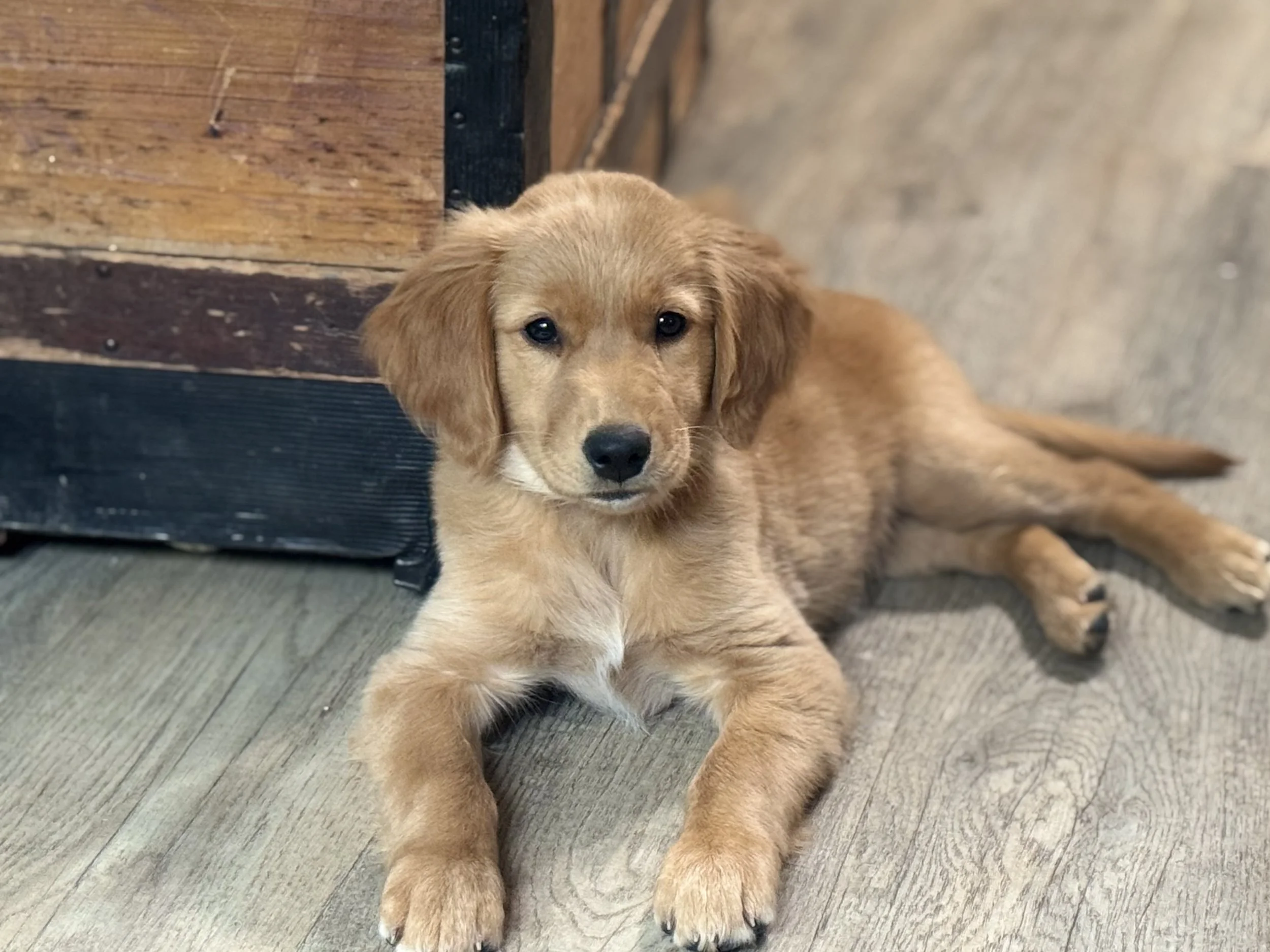
Cayenne & Padre - Due November 1st, tentatively going home Dec. 27, 2026 • Dark Golden (Darker gold to a dark red gold)
Lacy & Atlas - Due November 1st, tentatively going home December 27, 2026 • Light Golden (often referred to as English Cream, especially when coming from European bloodlines)
TO RESERVE
Total Price: $3000-$3200 for Limited AKC Registration
*Unless otherwise stated
$500 DEPOSIT +
$2500-$2700 AT THE TIME OF PICKUP +tax
*6 % Idaho State tax will be added to the final total.
*Full registration is available with approval
If you simply want to be on a contact list, but are not certain yet, please fill out the application. There is no fee.
Denali & Atlas’ Golden Retreiver LitteR
Born: Sept 18, 2026
Go home date: November 13, 2026
Waitlist Open
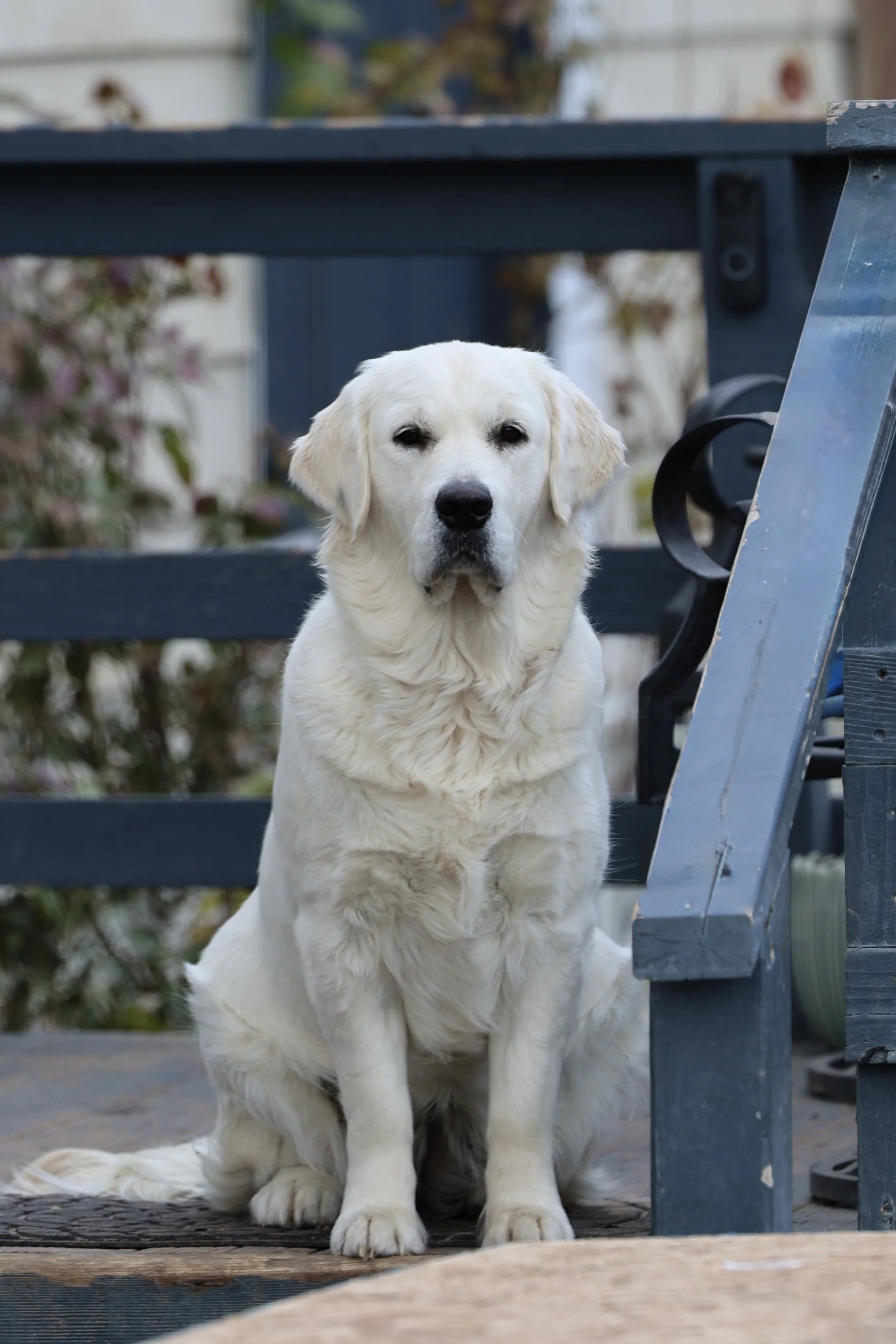
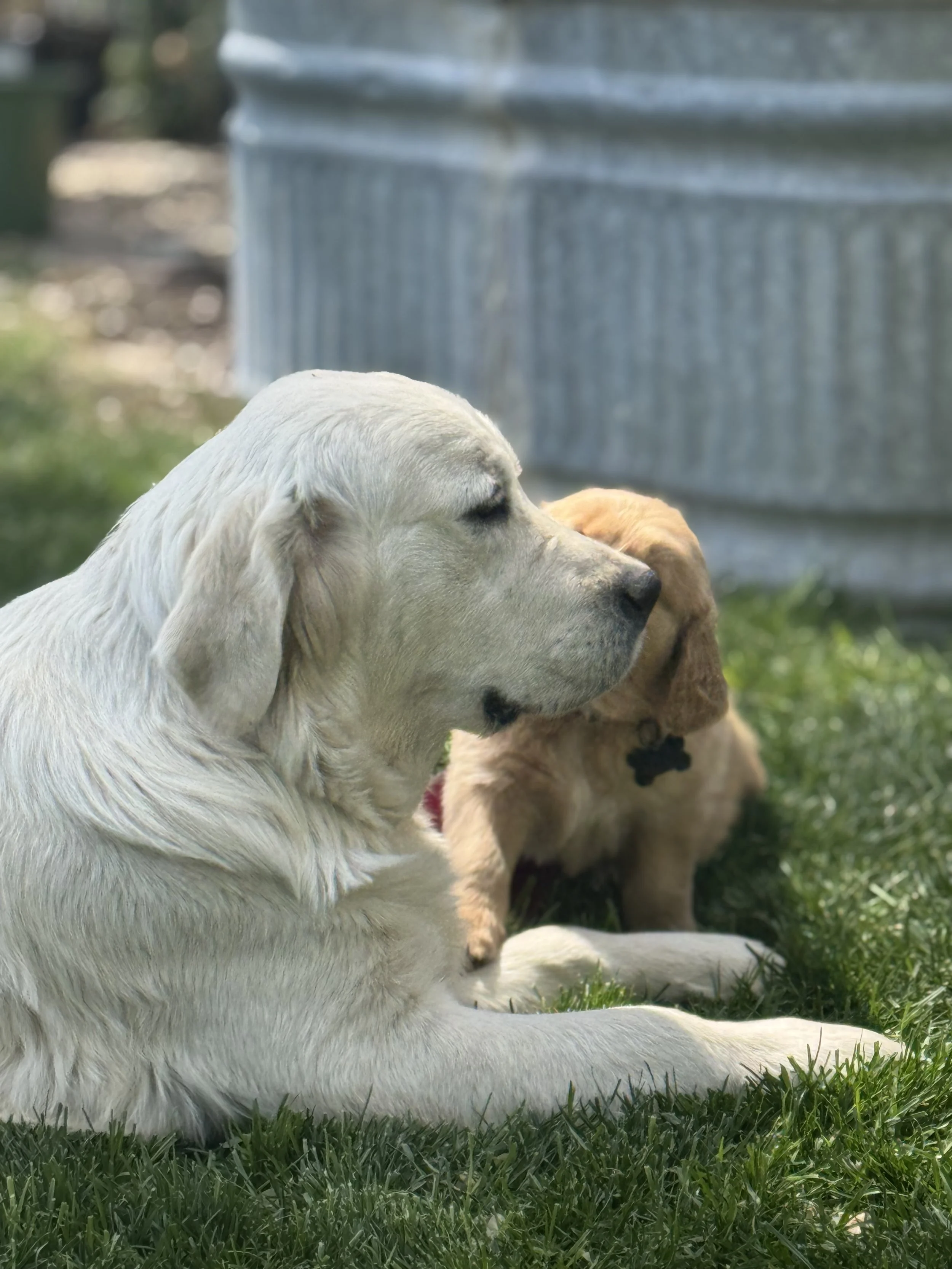
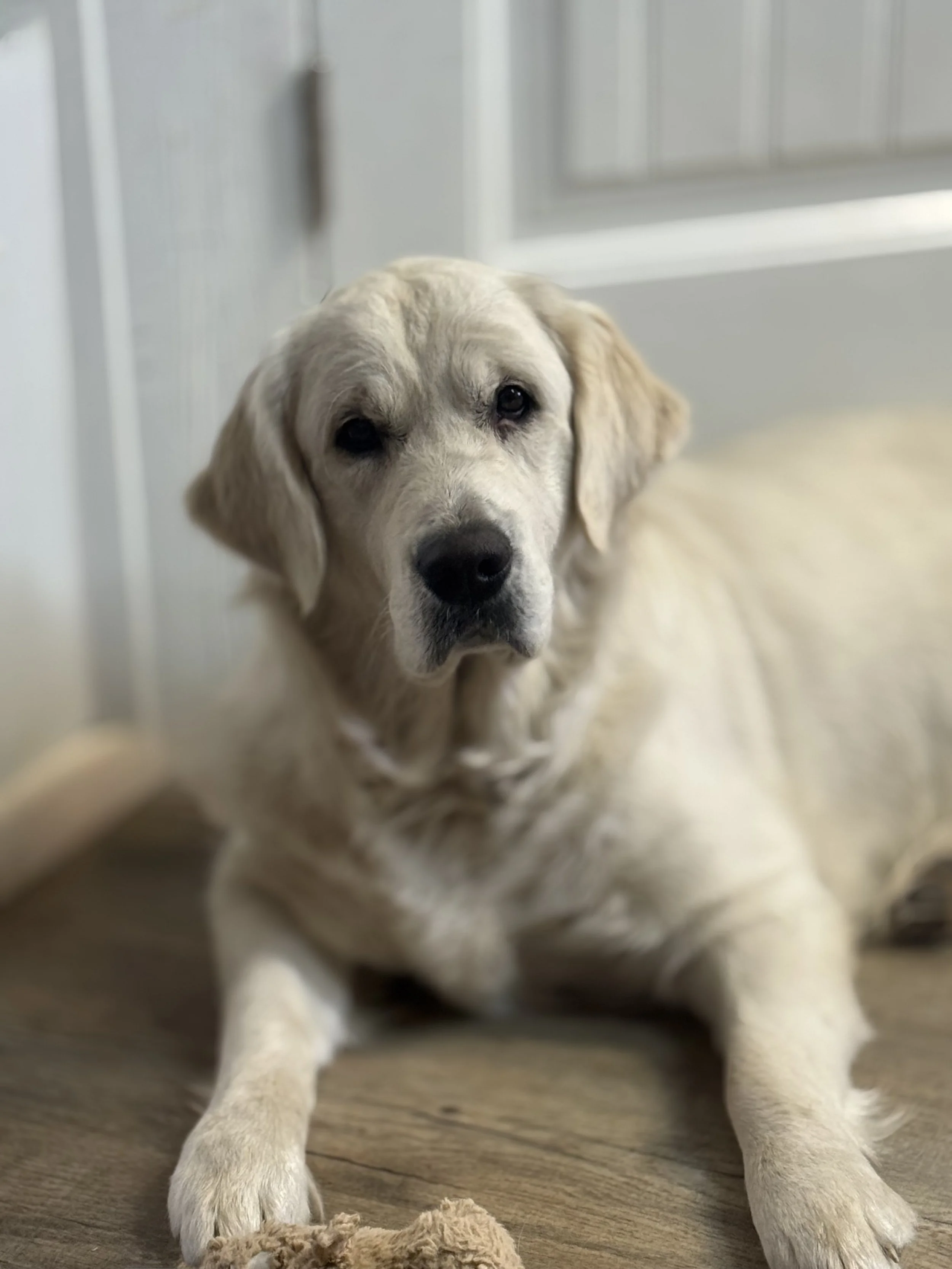
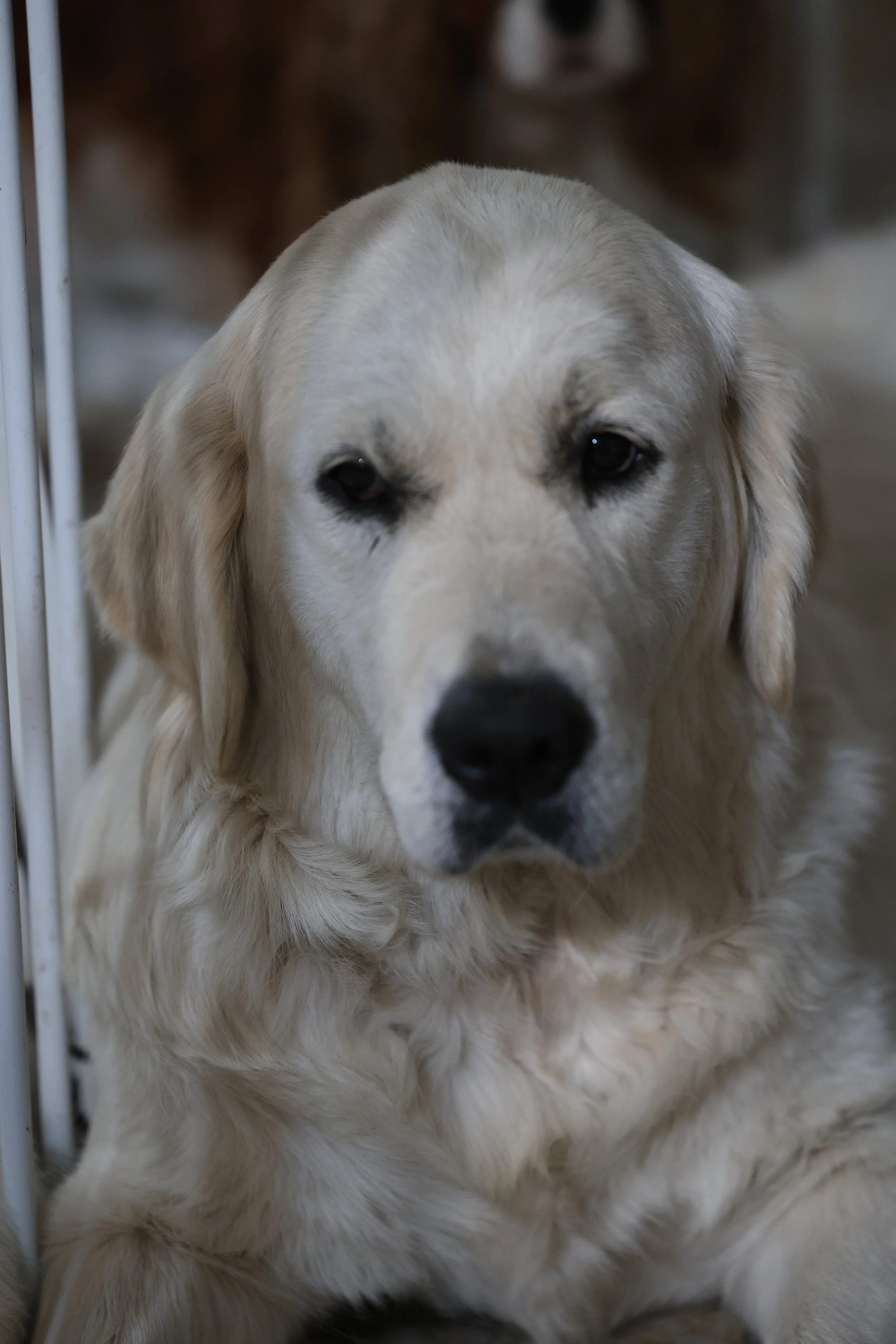
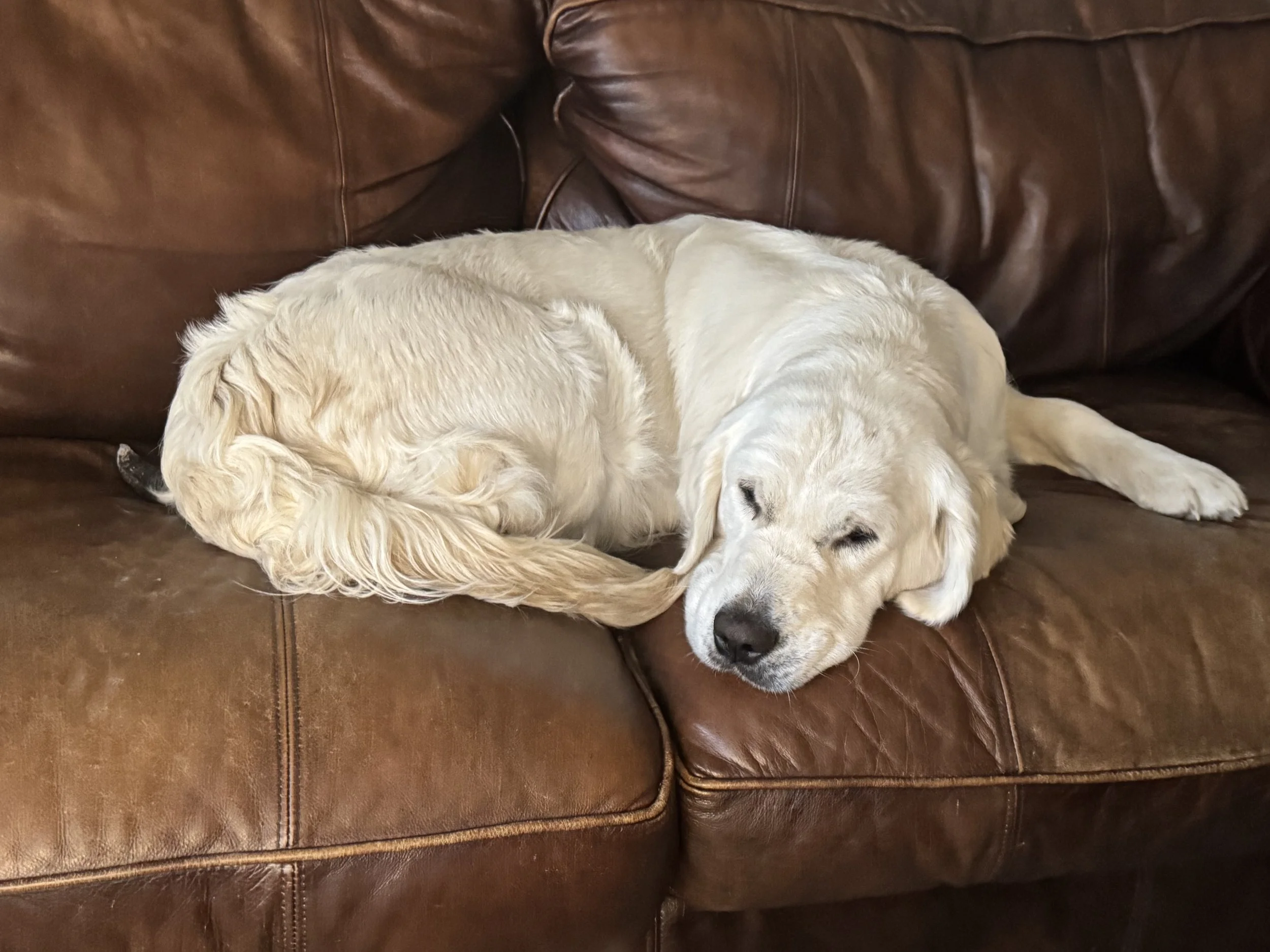
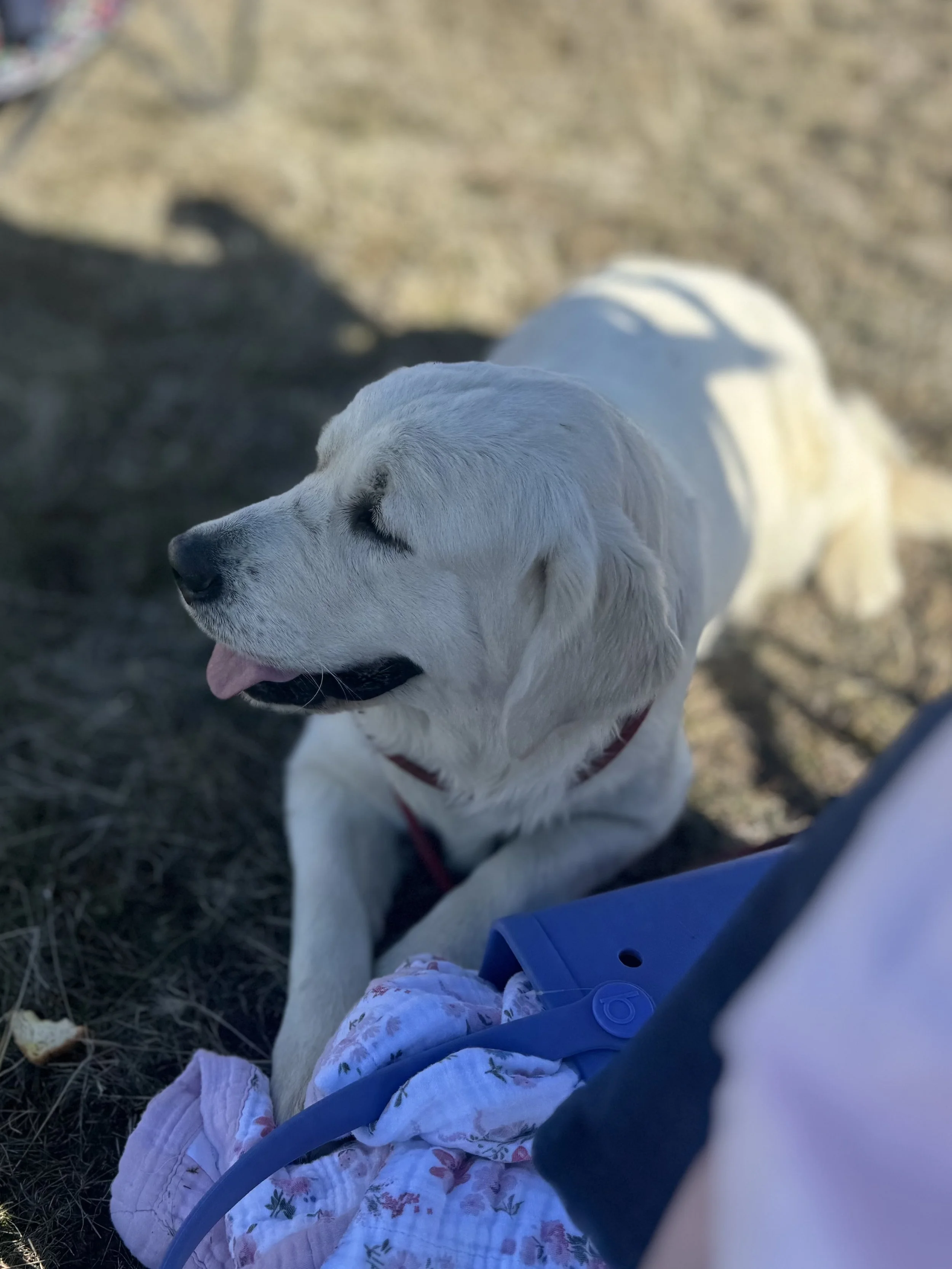
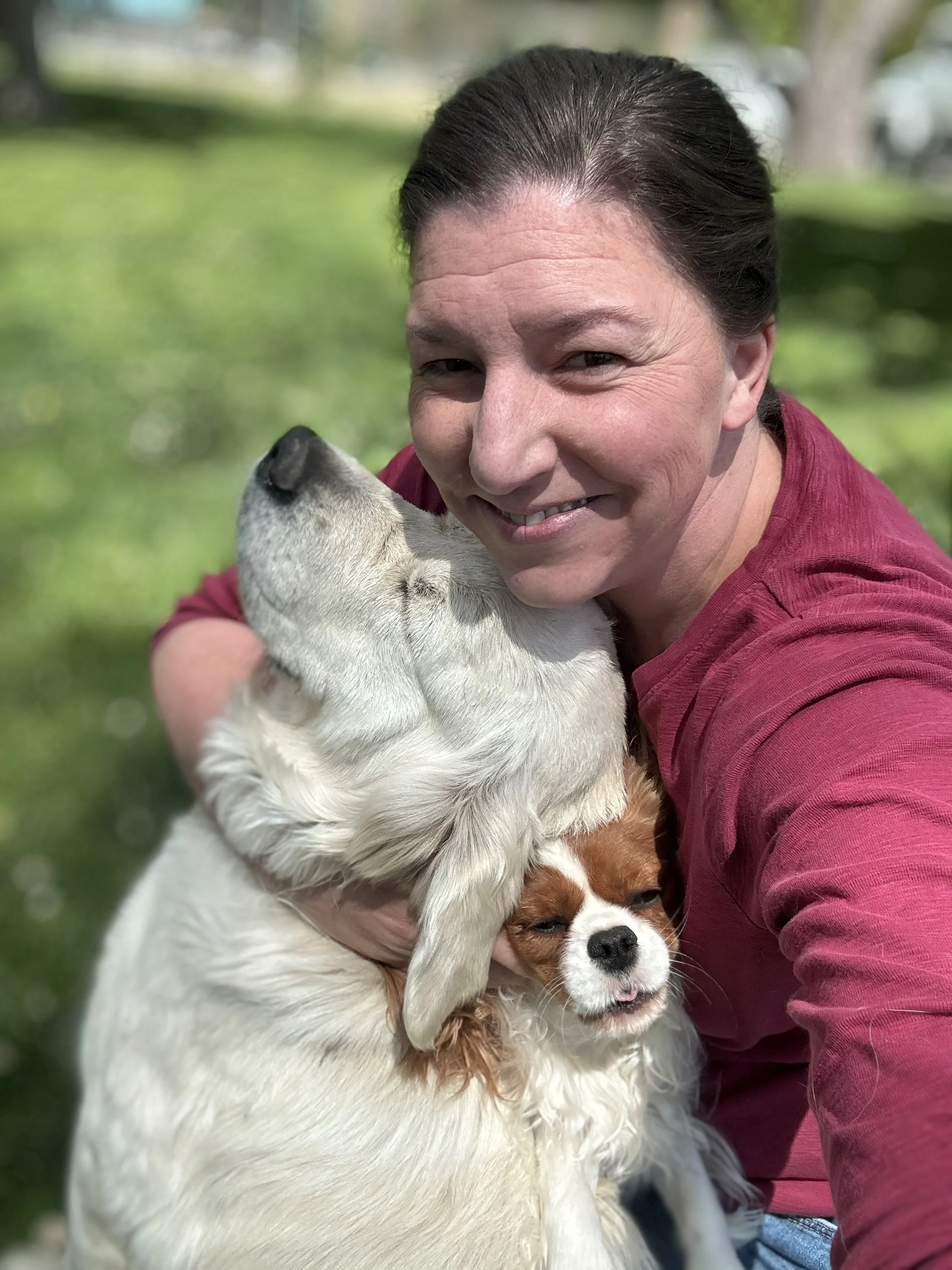
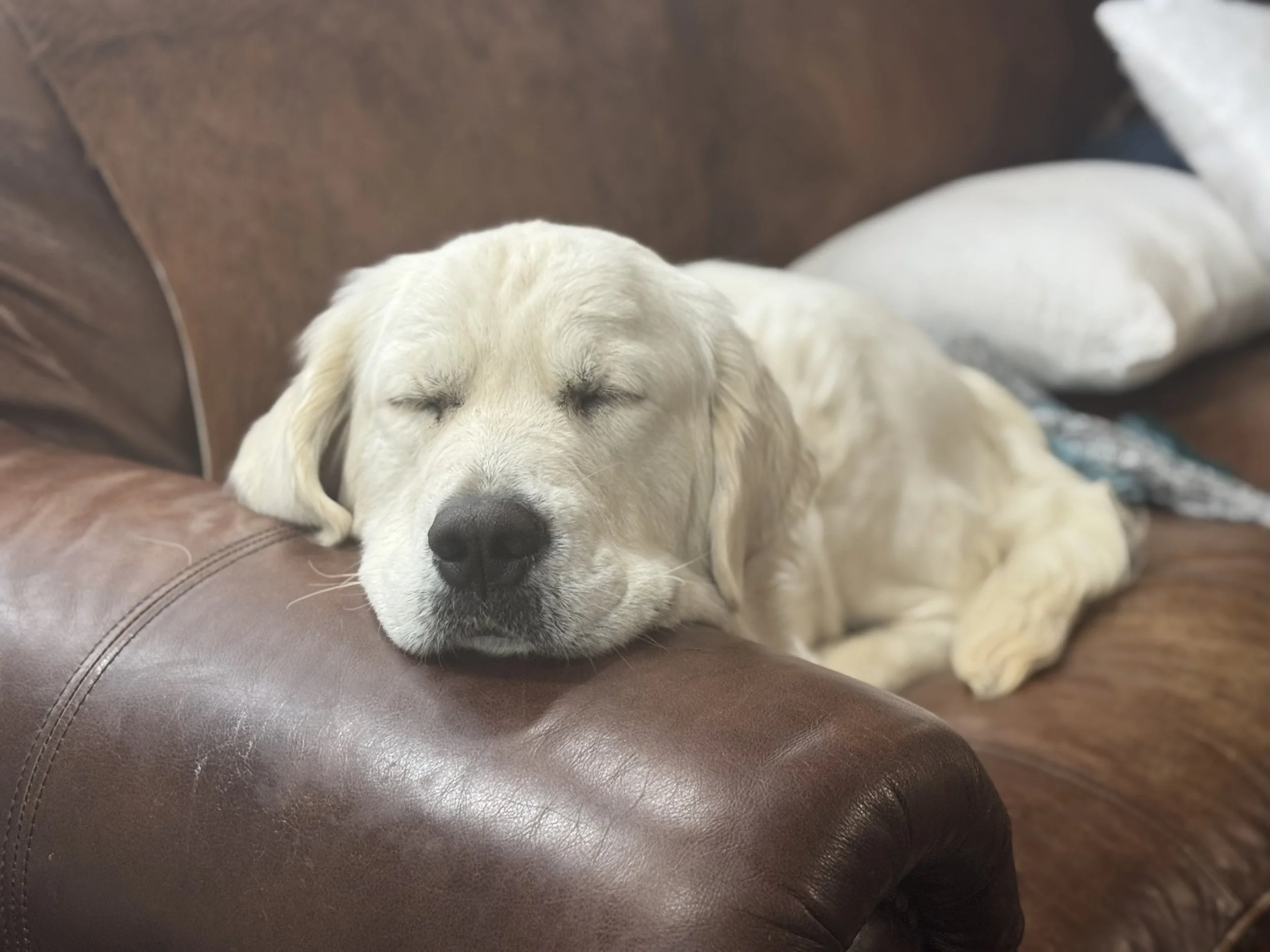
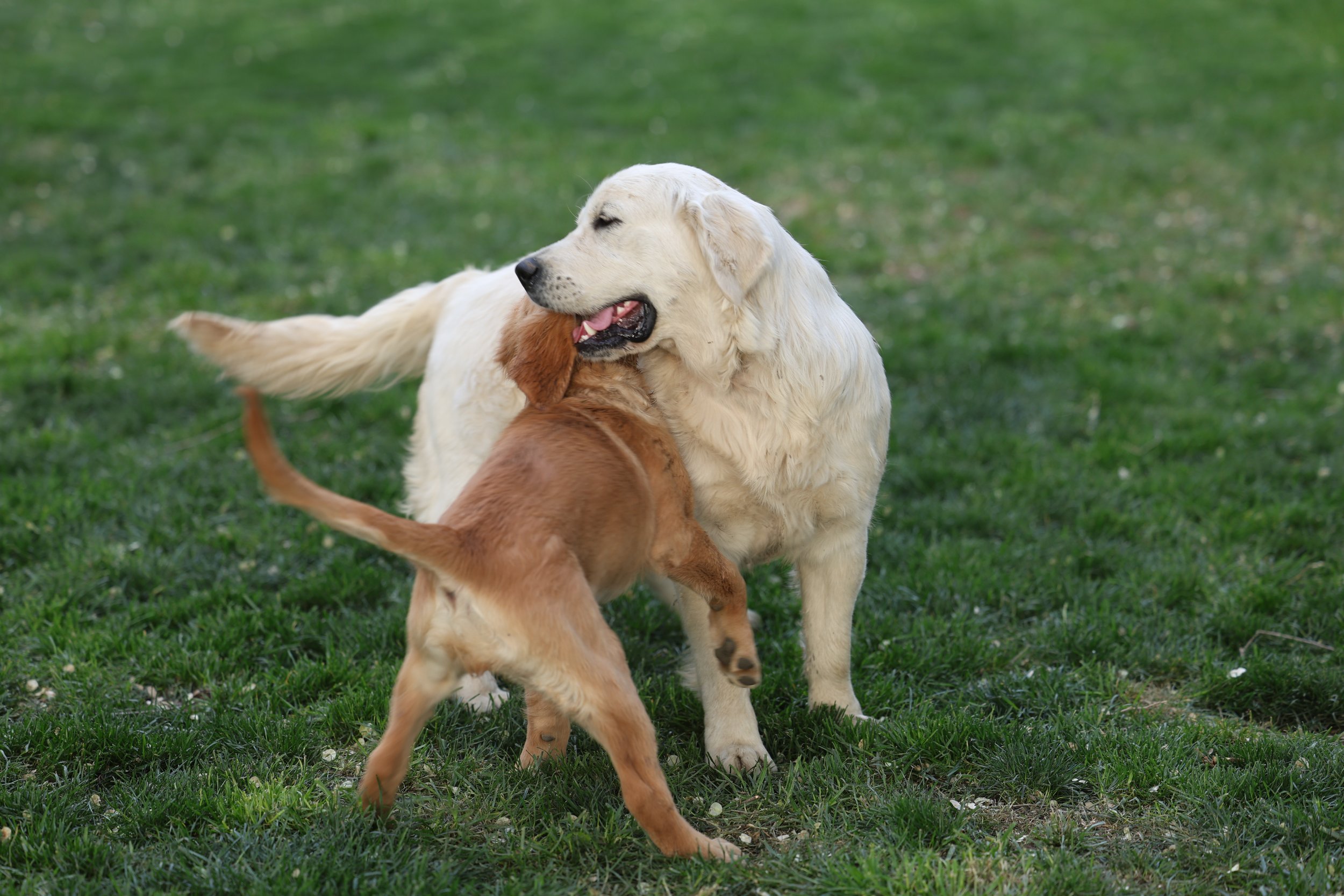
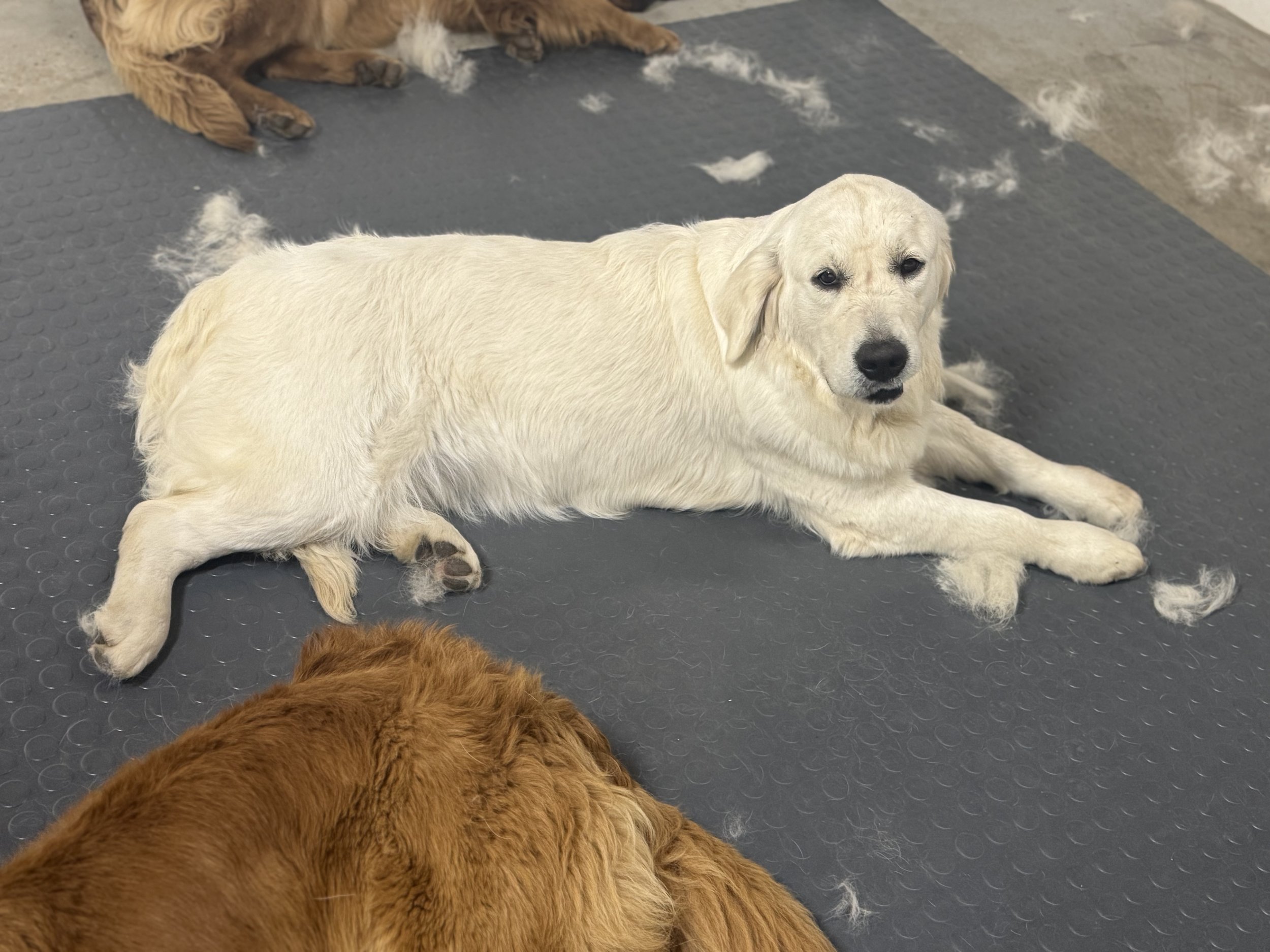
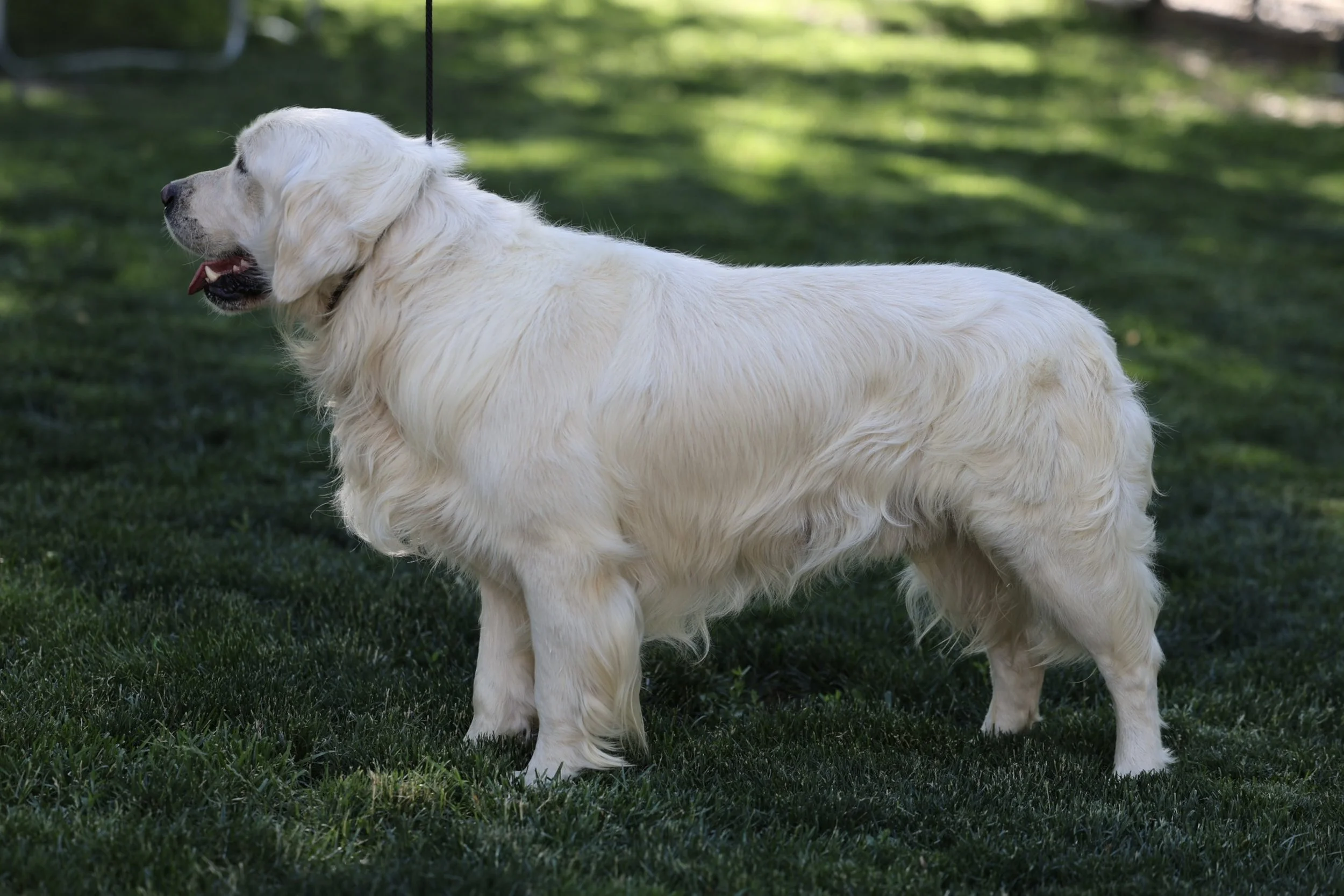
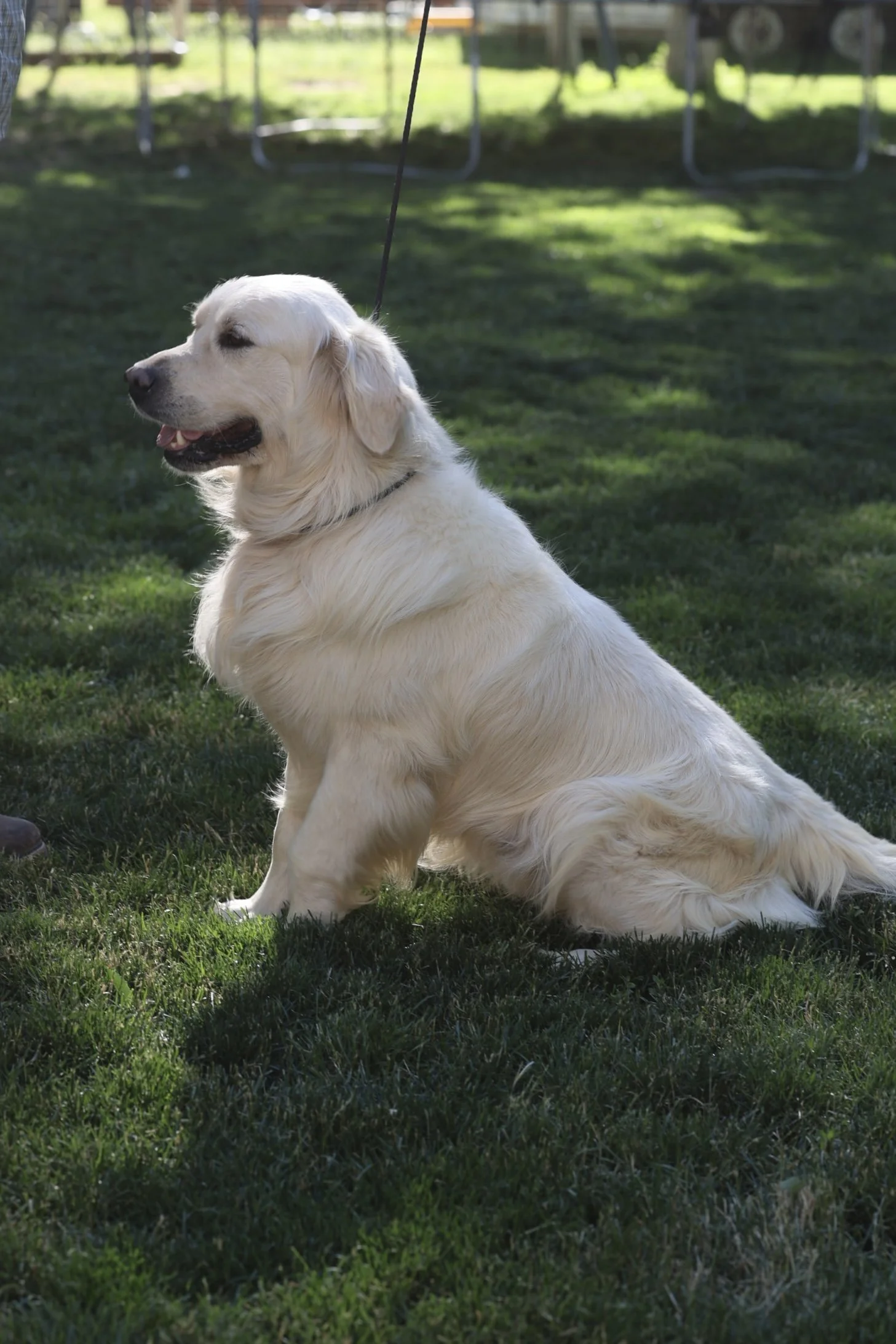
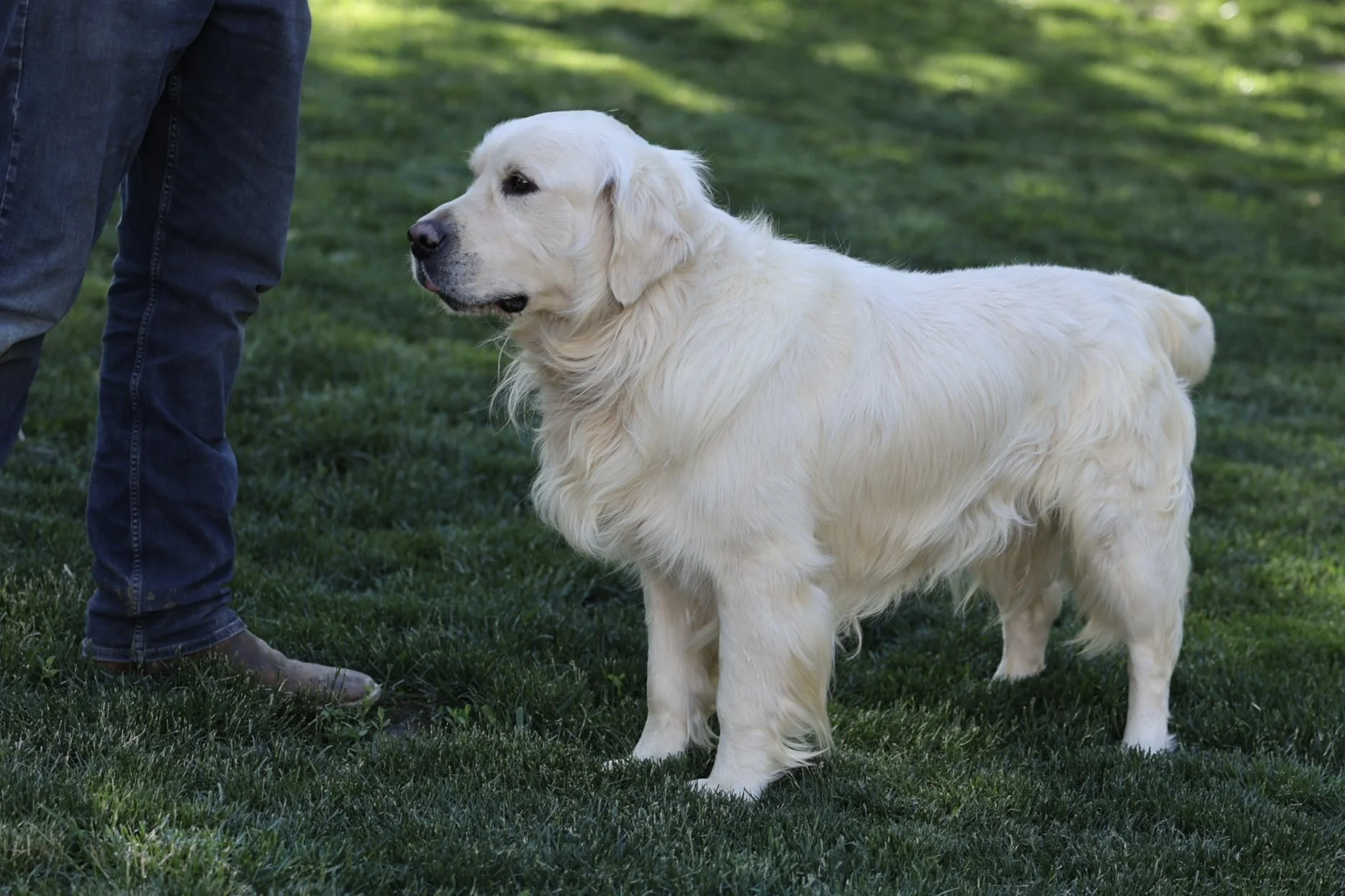
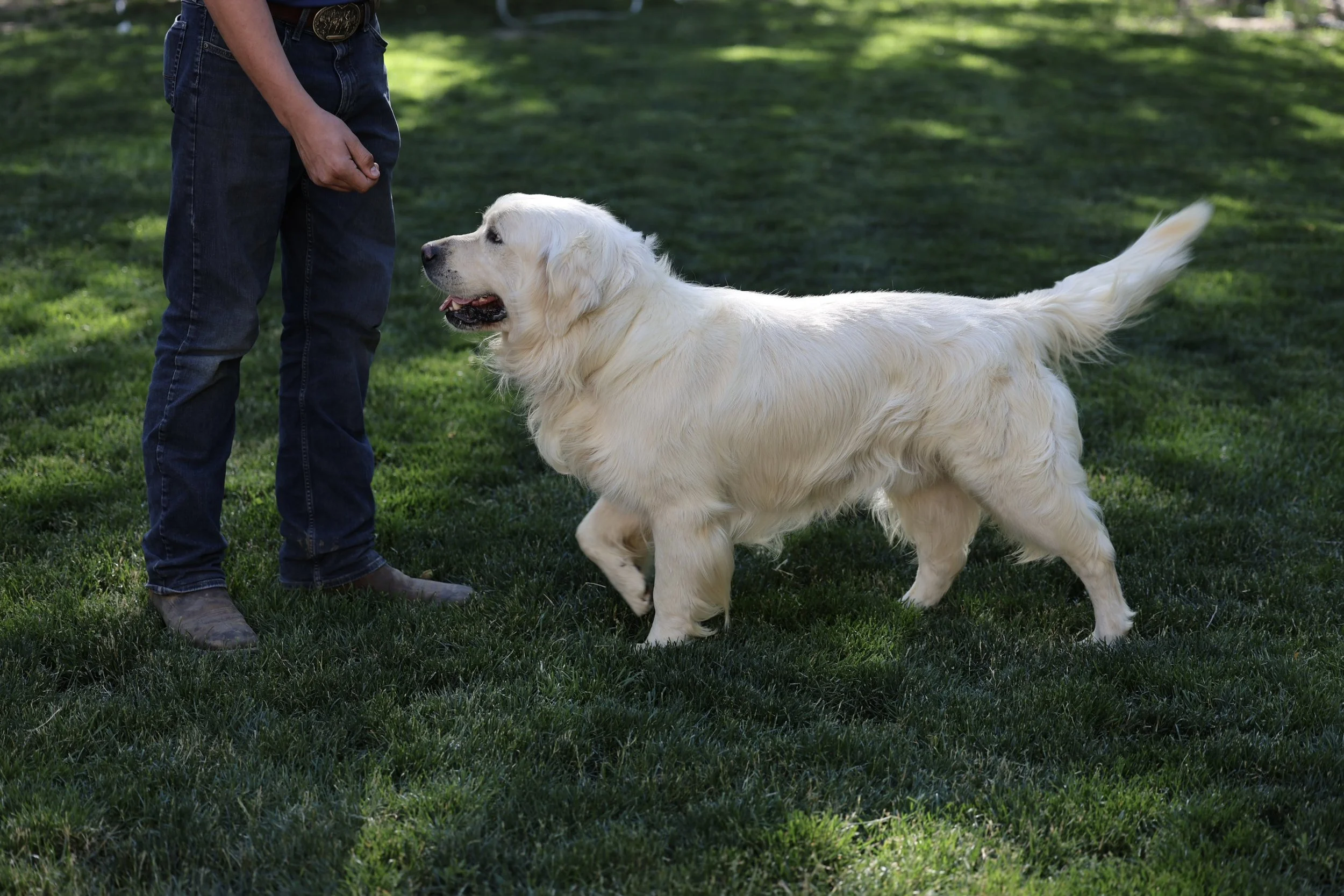
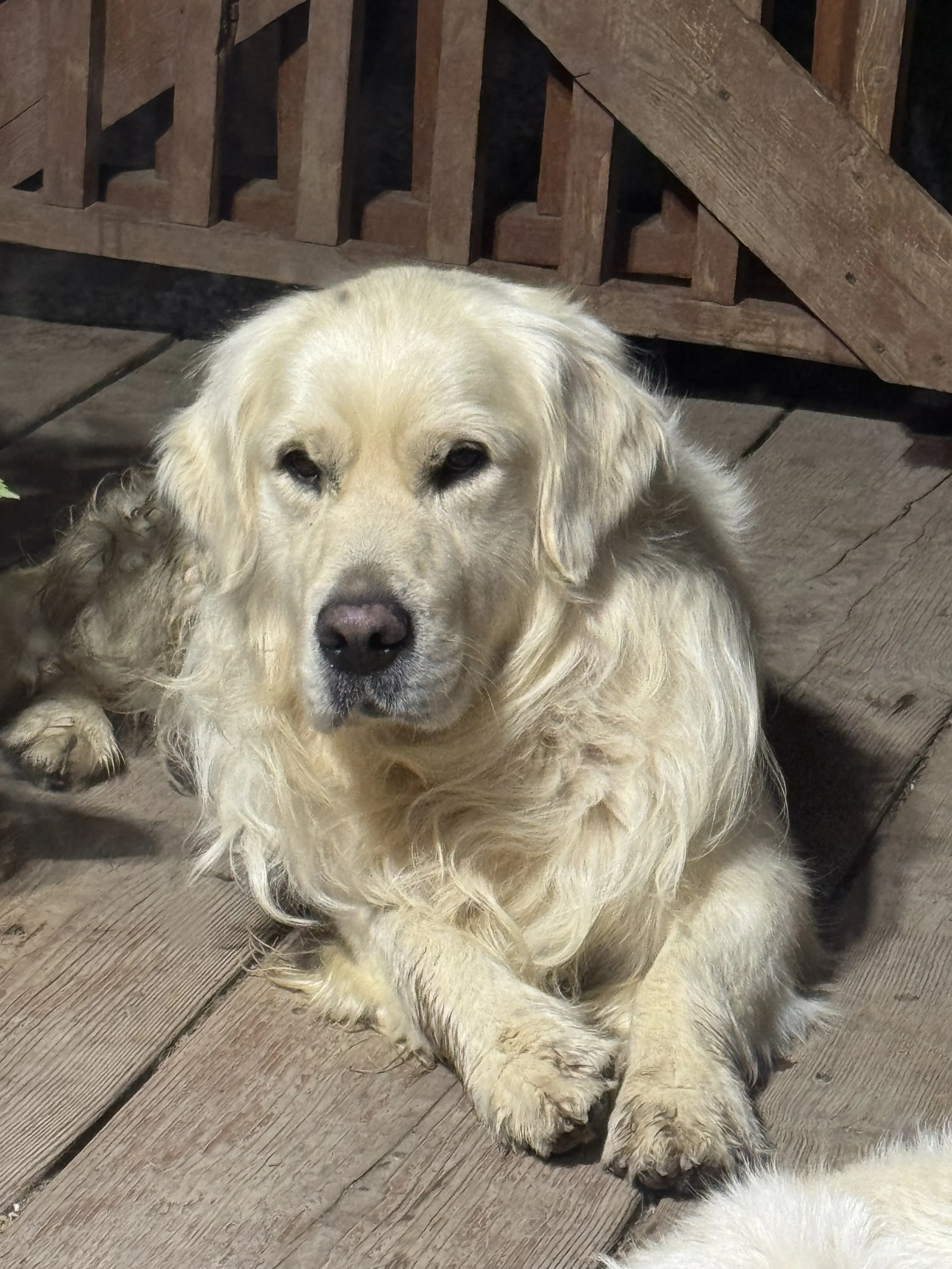
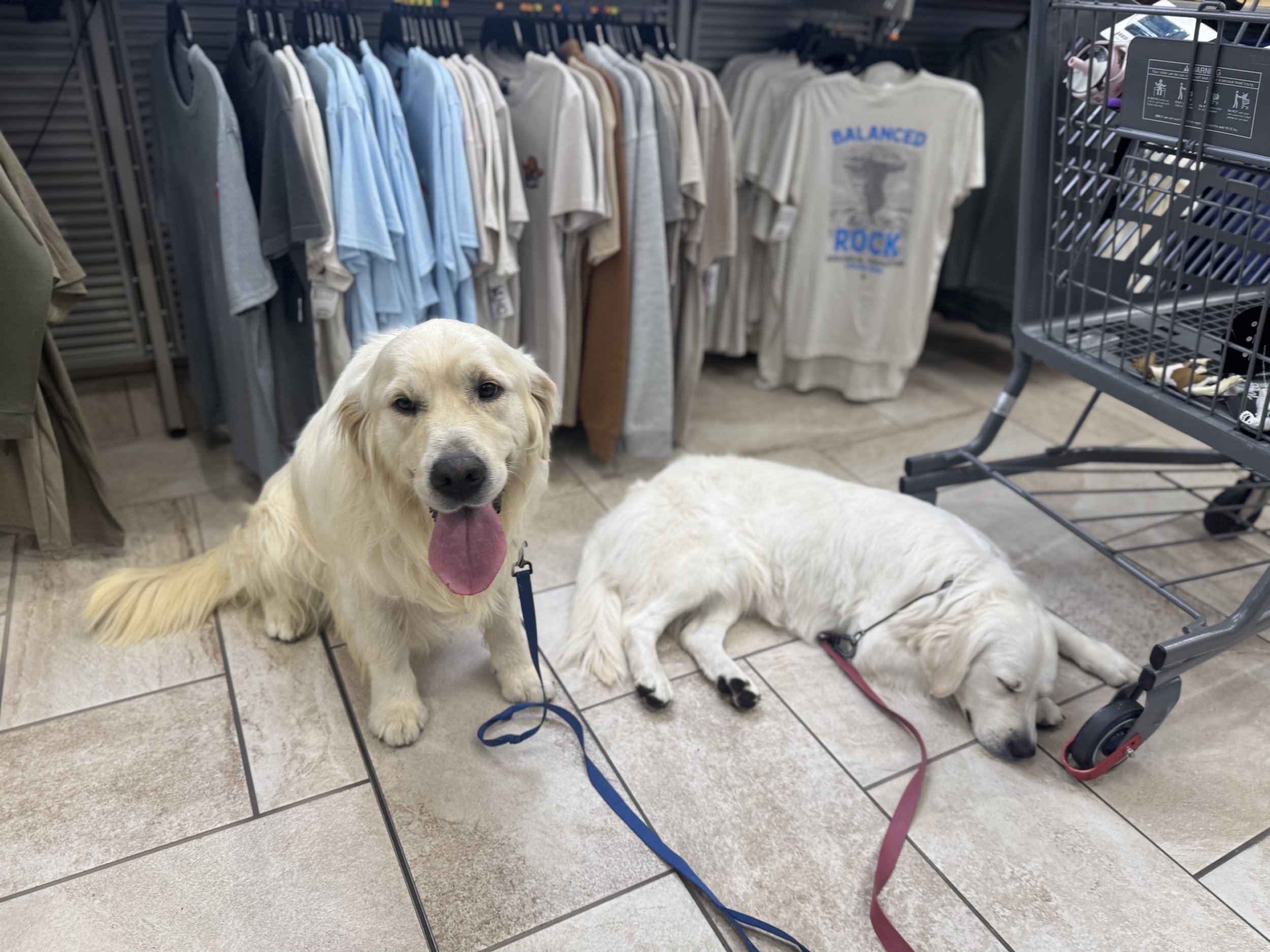
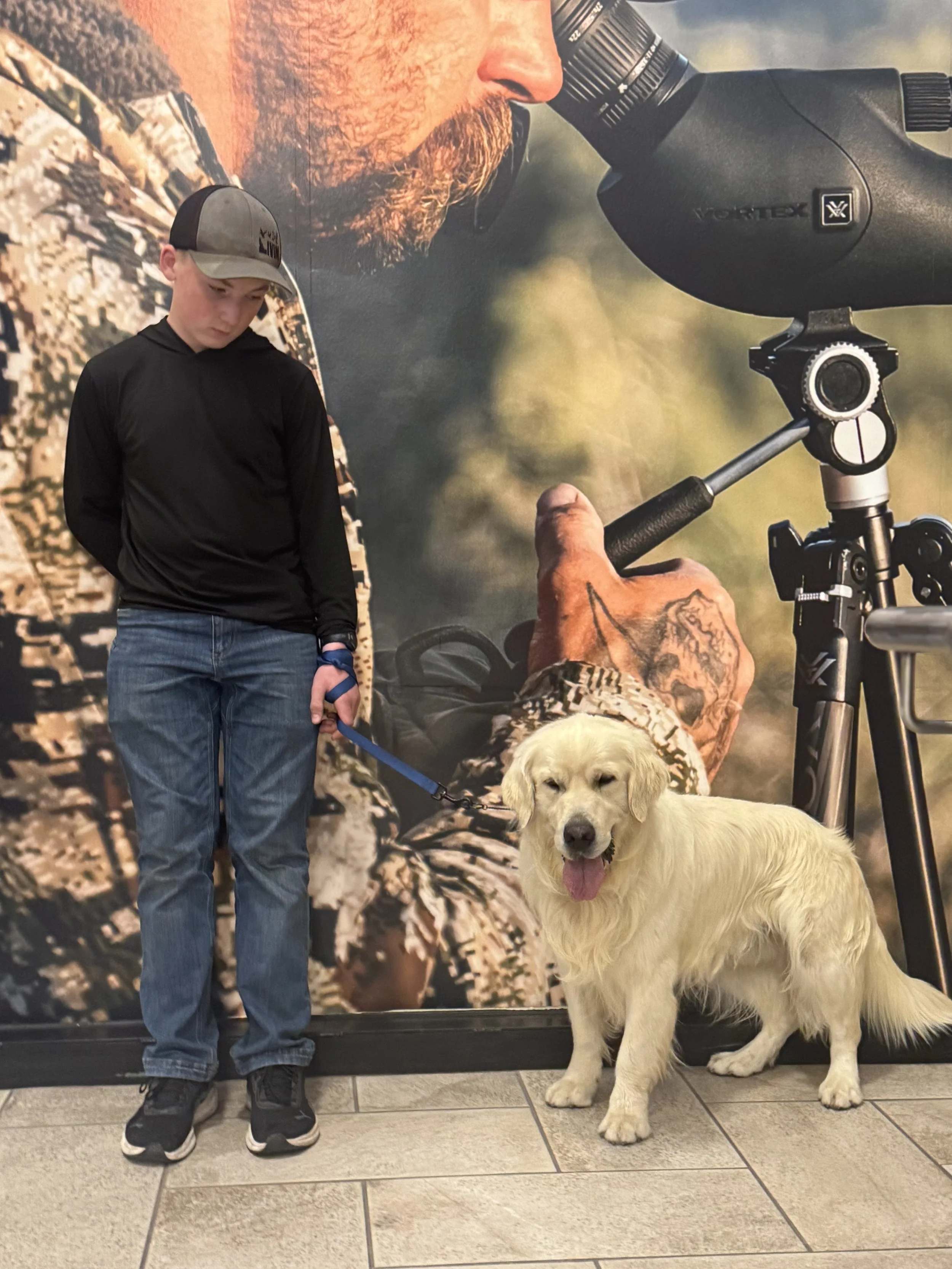
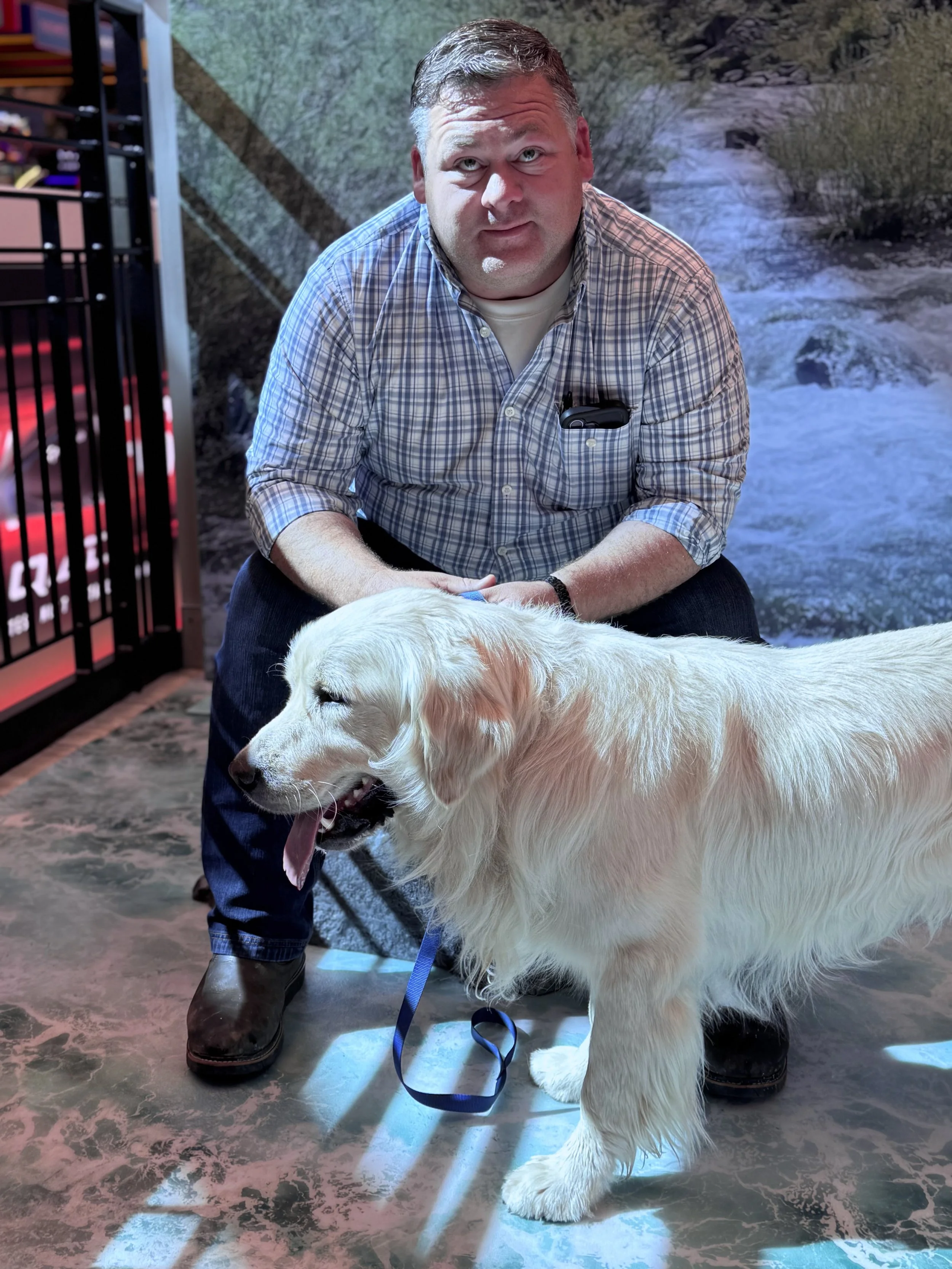
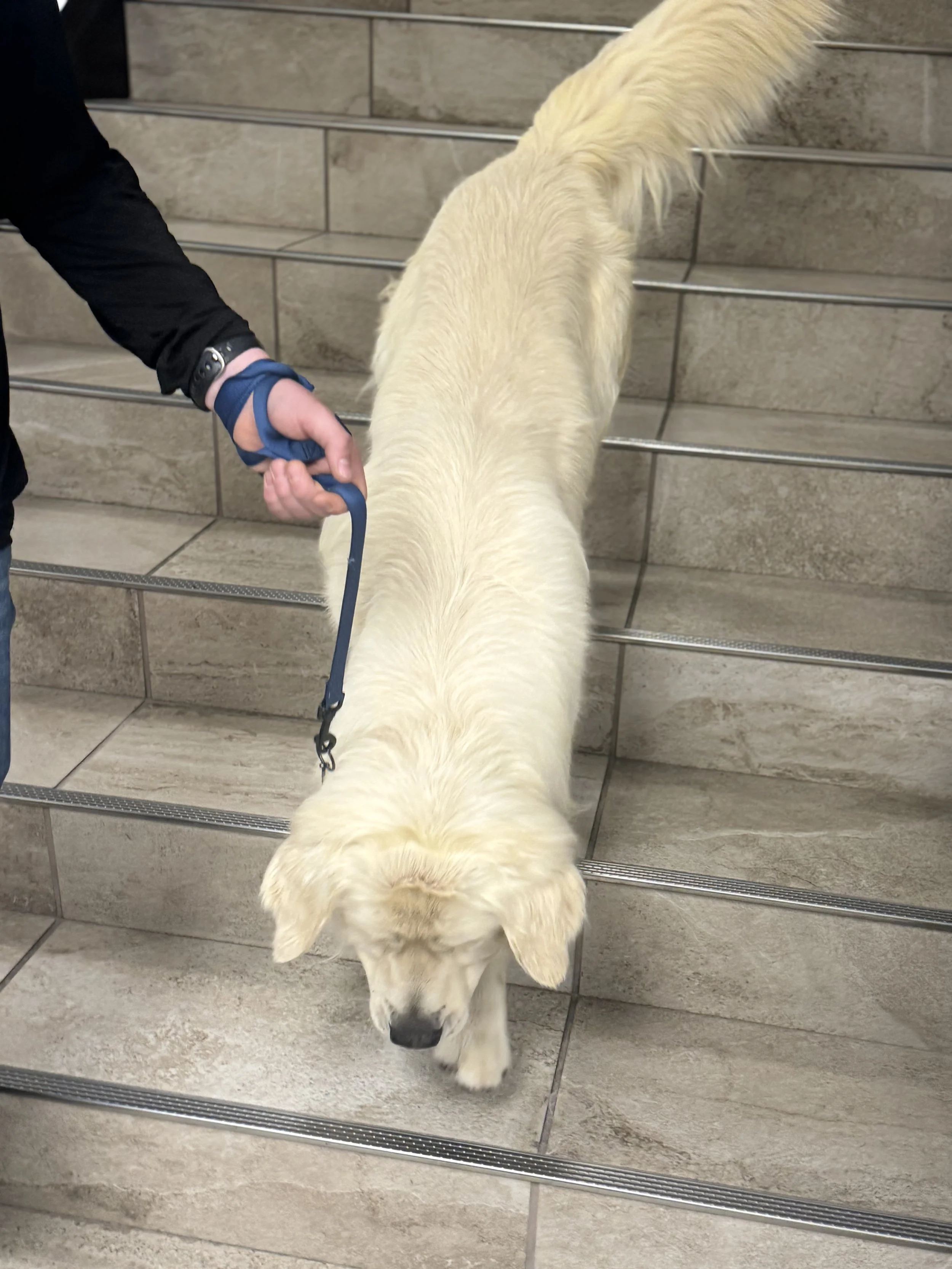
Denali: Dogs around here belong to different family members. Denali is a personal favorite of mine. She’s never been a pushy girl, but she loves to be with the family, and especially with me. She is SO so gentle with puppies (not even her own). She enjoys playing ball, but doesn't have to do it to be happy. You might catch her slow playing/ wrestling with some adolescent puppy or nuzzling another mama’s babies instead. Denali’s parents came over straight from the Ukraine, so very much European bloodlines.
Weight: 78lbs
Body and Coat: Denali has an average volume coat, with just a hint of curl to it if it doesn’t get dried correctly. She has a stockier type bone structure very typical of the European lines of golden retrievers.
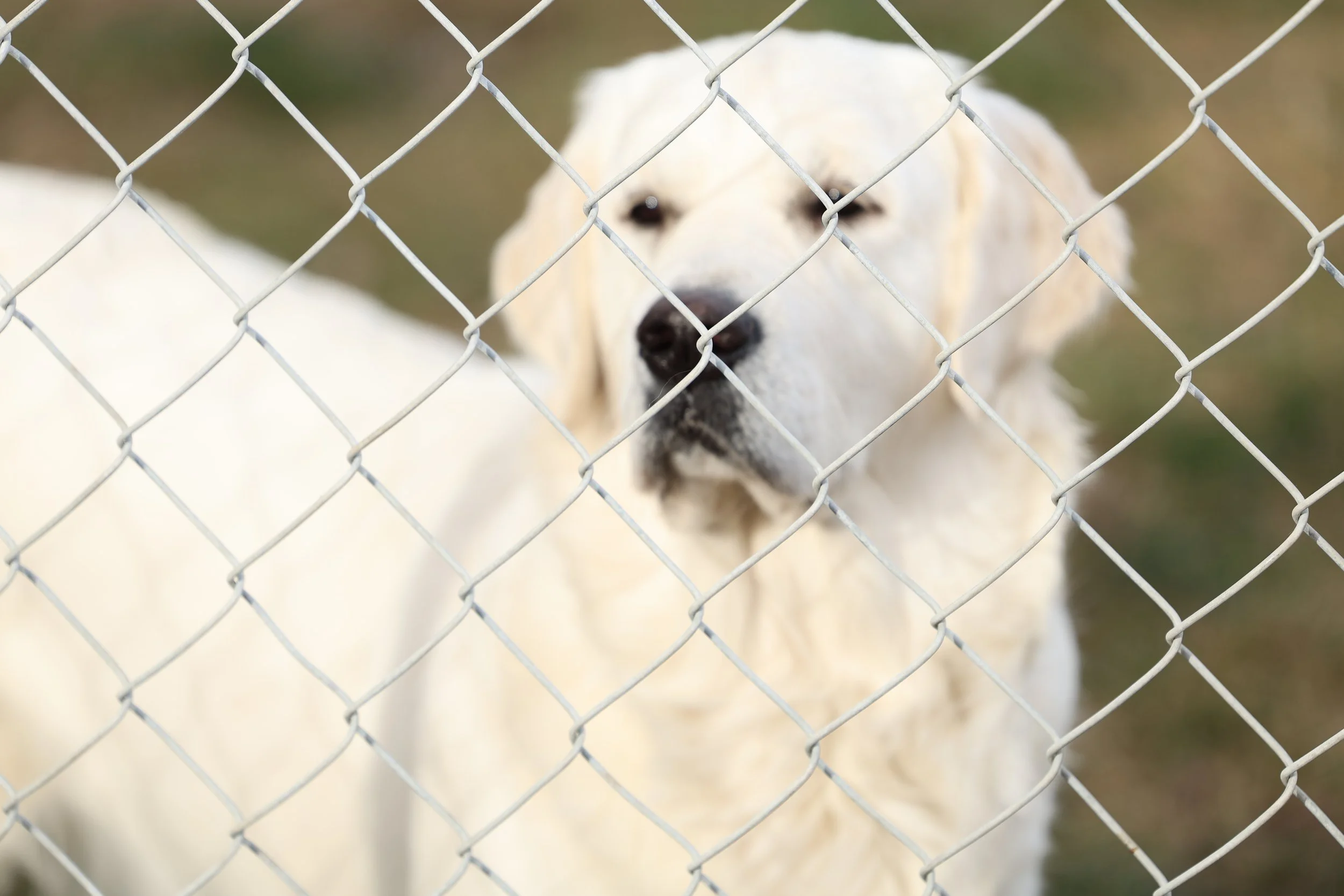
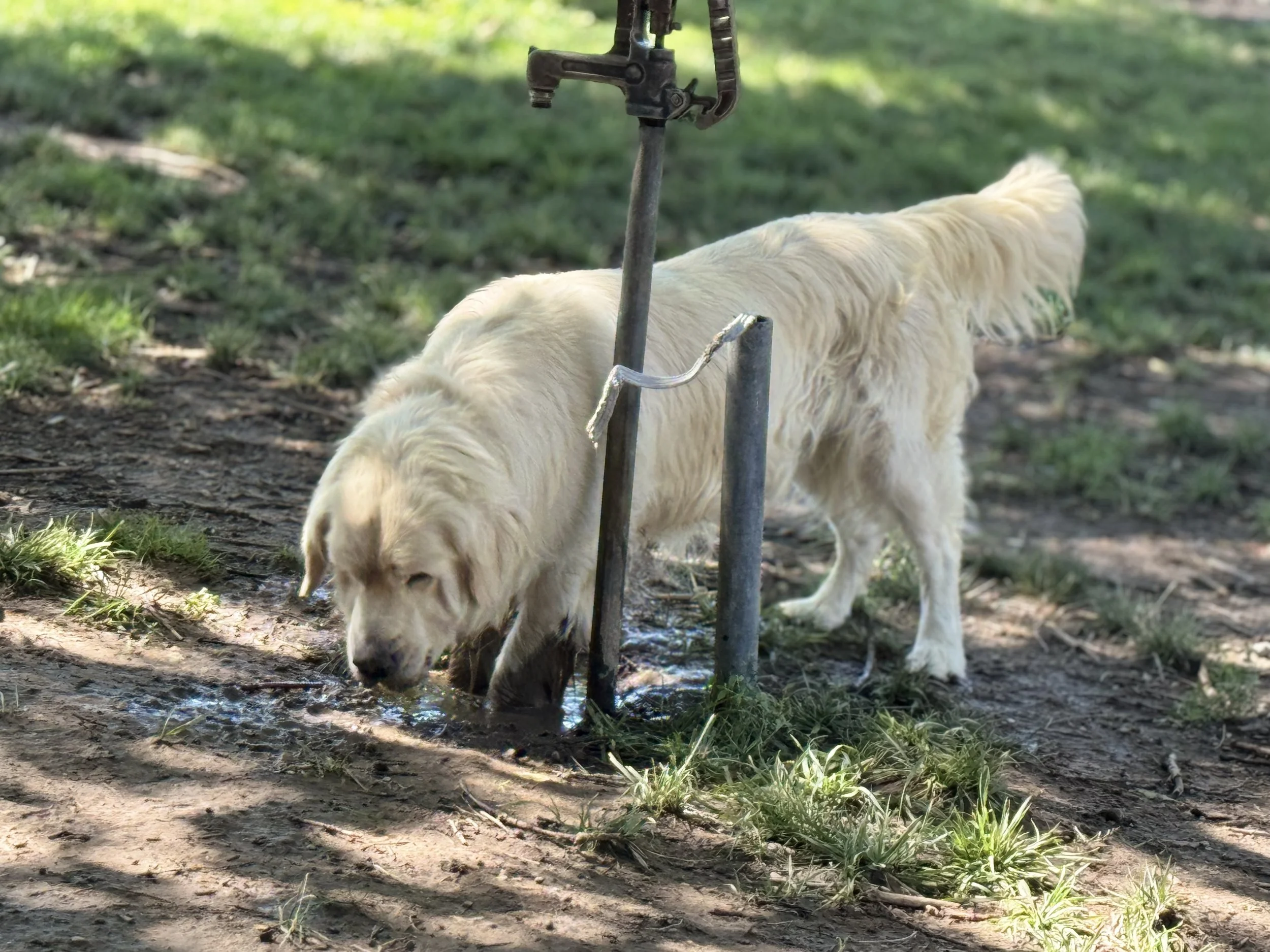
Atlas: Majestic is the word that comes to mind when I think of Atlas. He’s a great boy with a solid and steady temperment. He’s great with kids and other dogs alike. He loves to sit on the porch and watch through my back door into the house. Water is this boys absolute #1 love. Be it a water pail, puddle, or pool, he will find it!
Weight: 84#
Body and Coat: Atlas has a thick, full coat that lays smoothly. He’s very average in height and body type.
Both Denali and Atlas have had been genetic tested, as well as have OFA and/or PennHIP testing
Cayenne & Padre’s
Golden Retreiver LitteR
Puppies Due November 1st, 2026
Potential Go Home Date December 27th, 2026
Waitlist Open
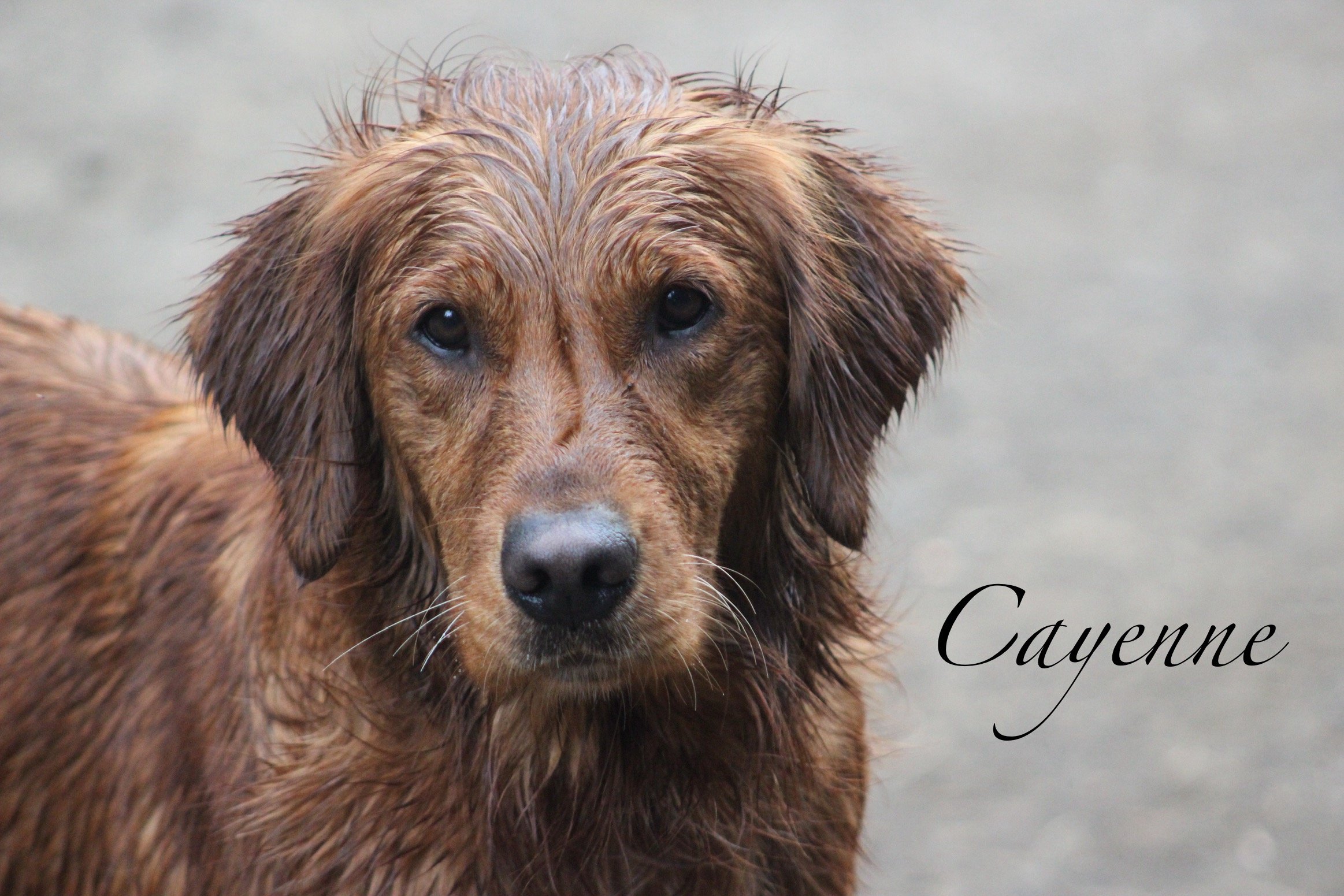
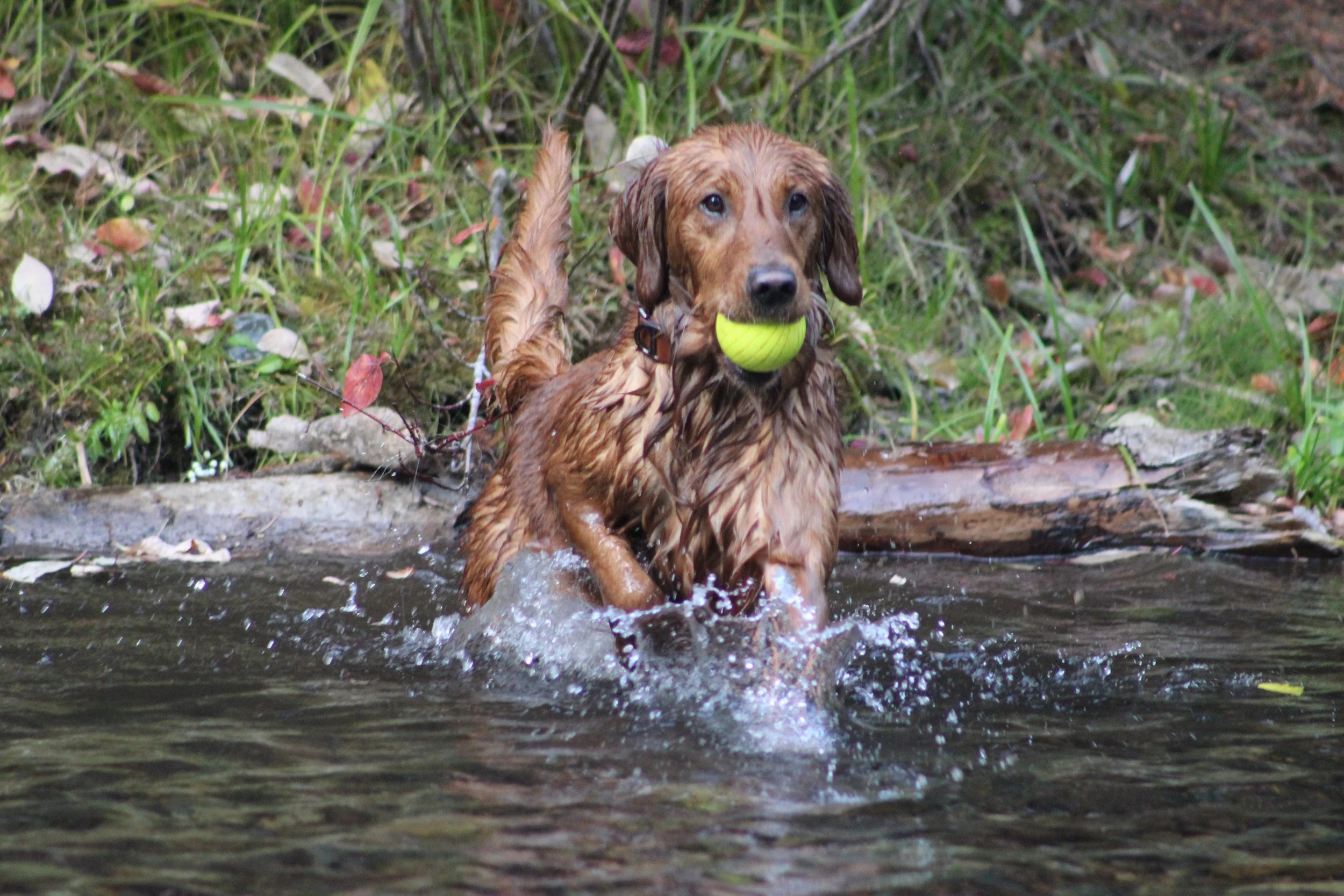

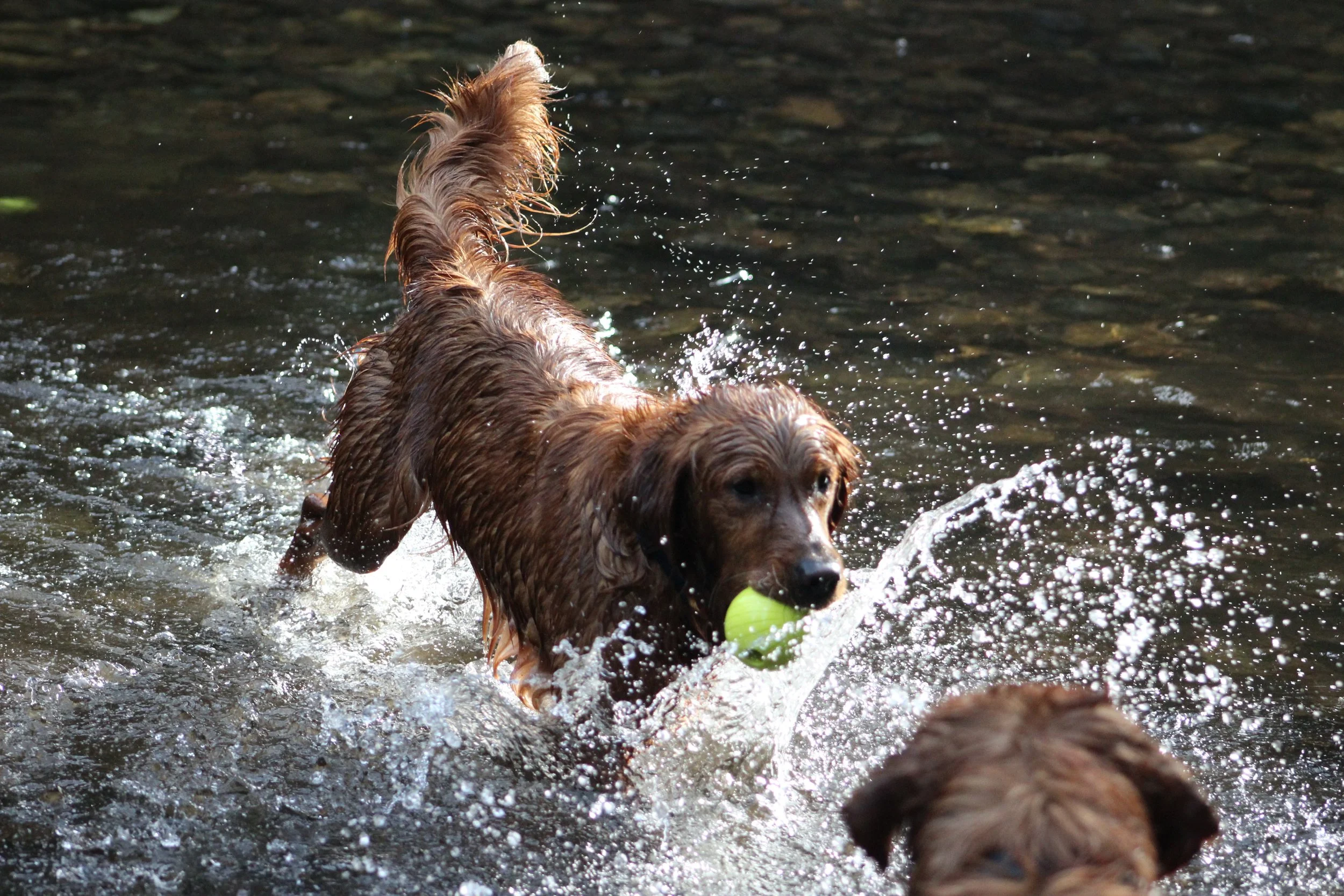
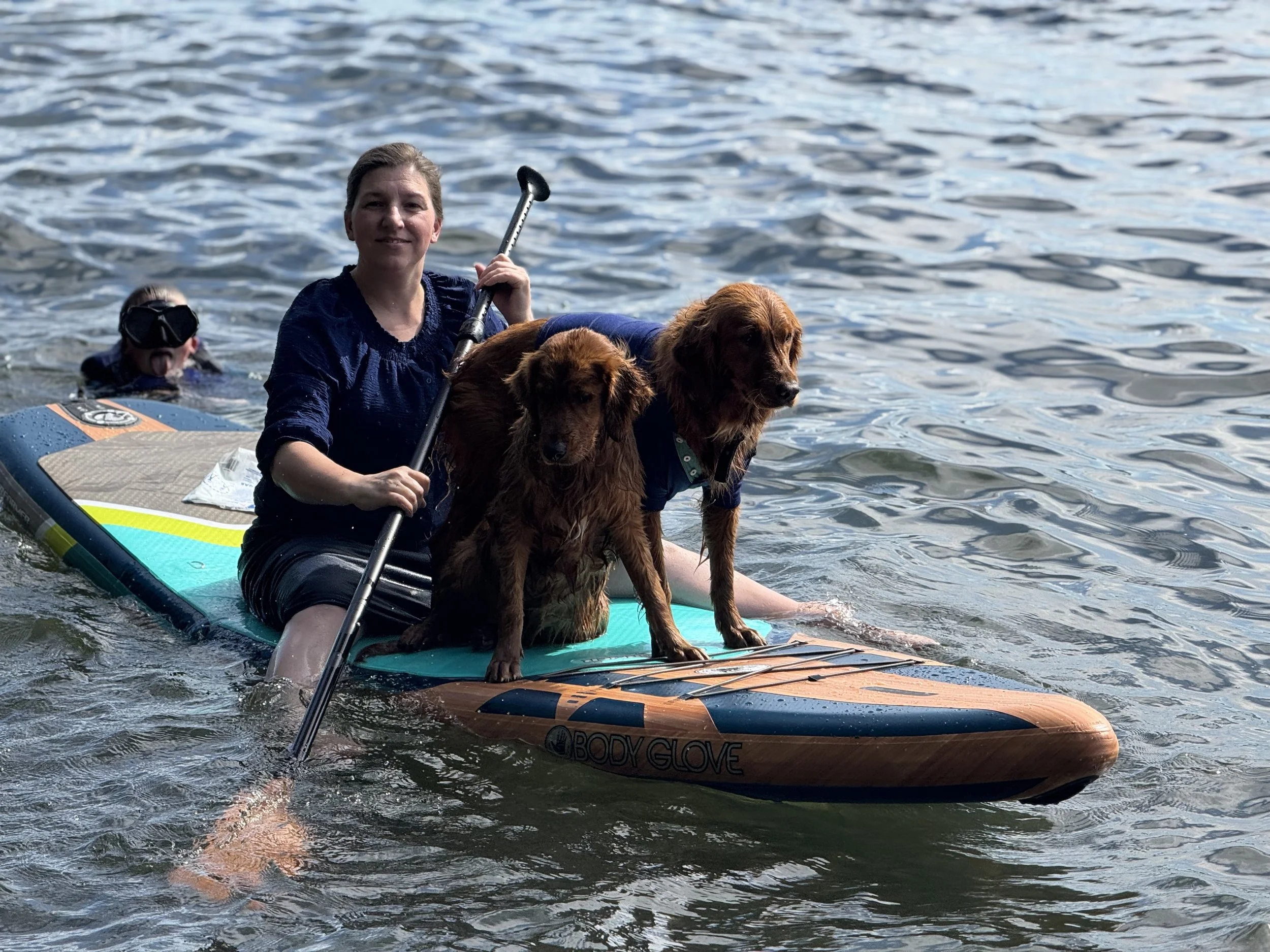
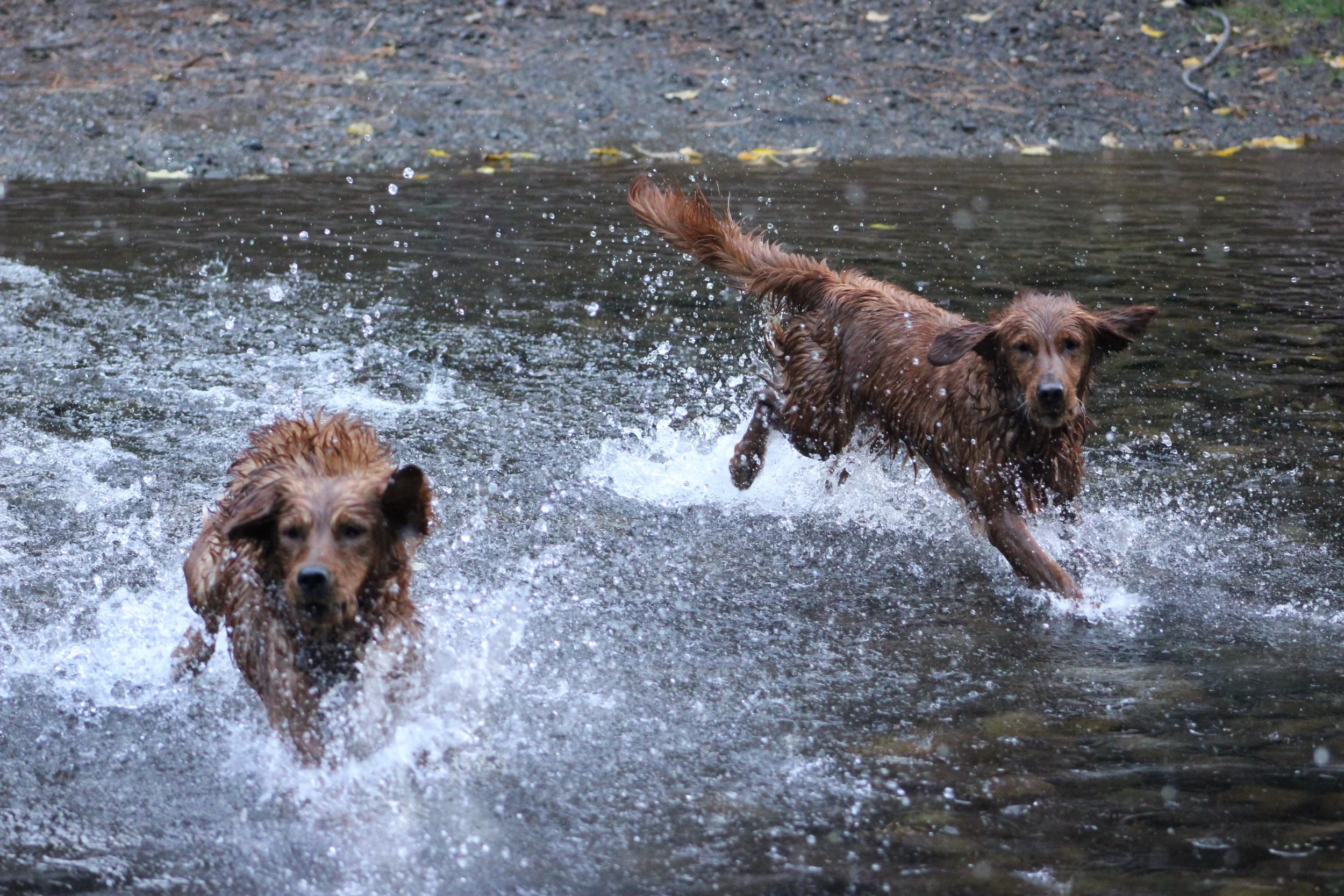
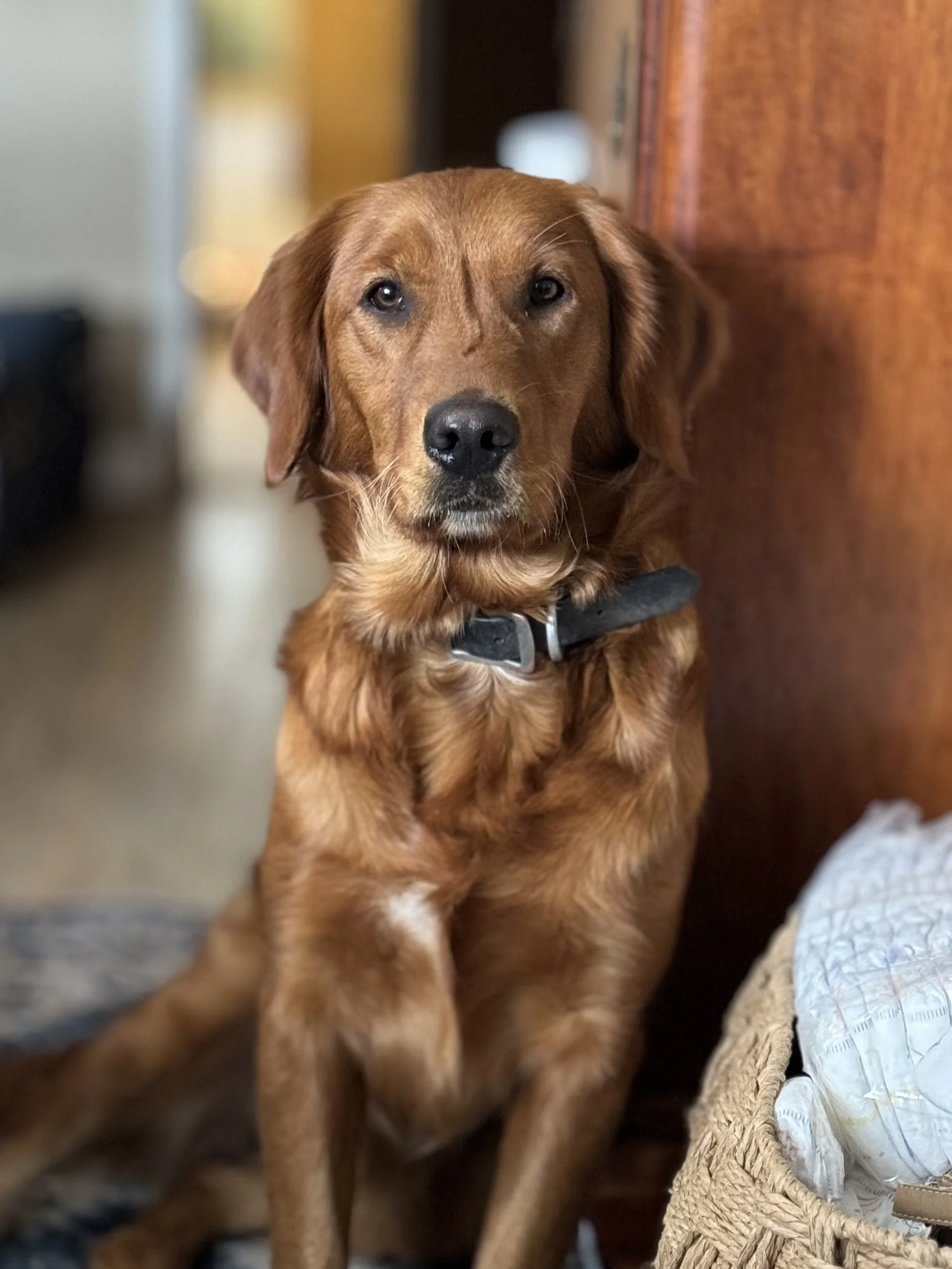
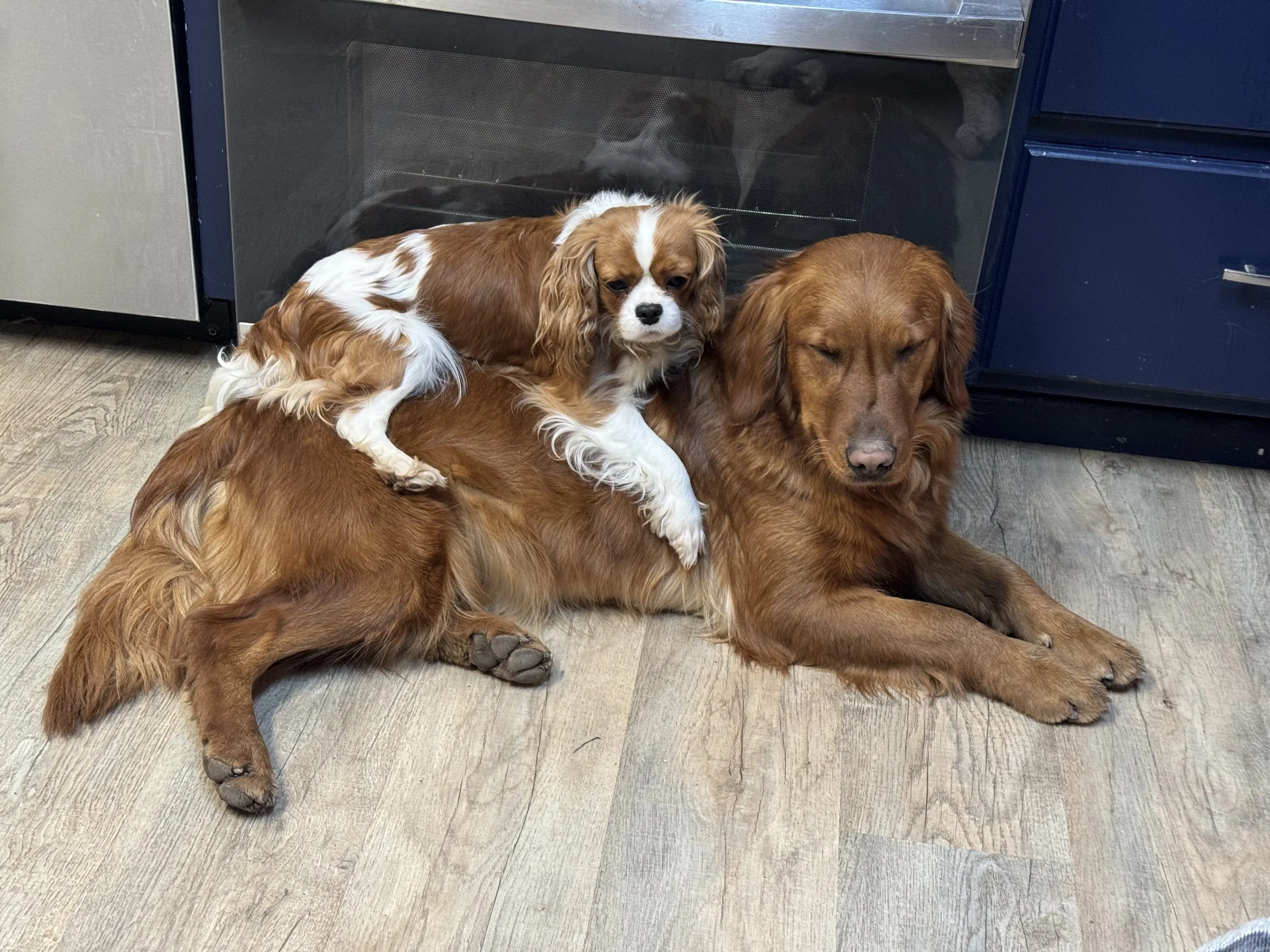
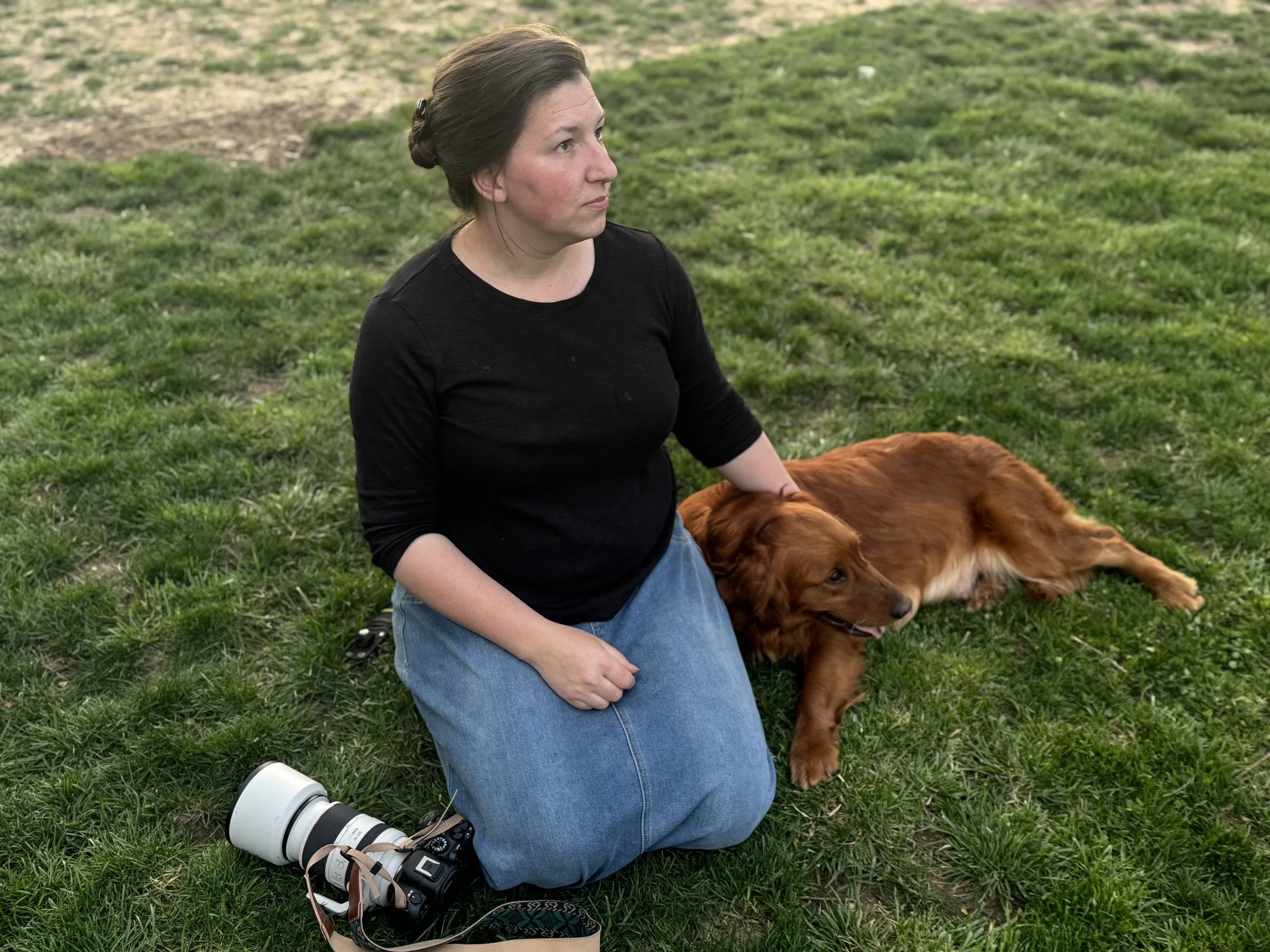
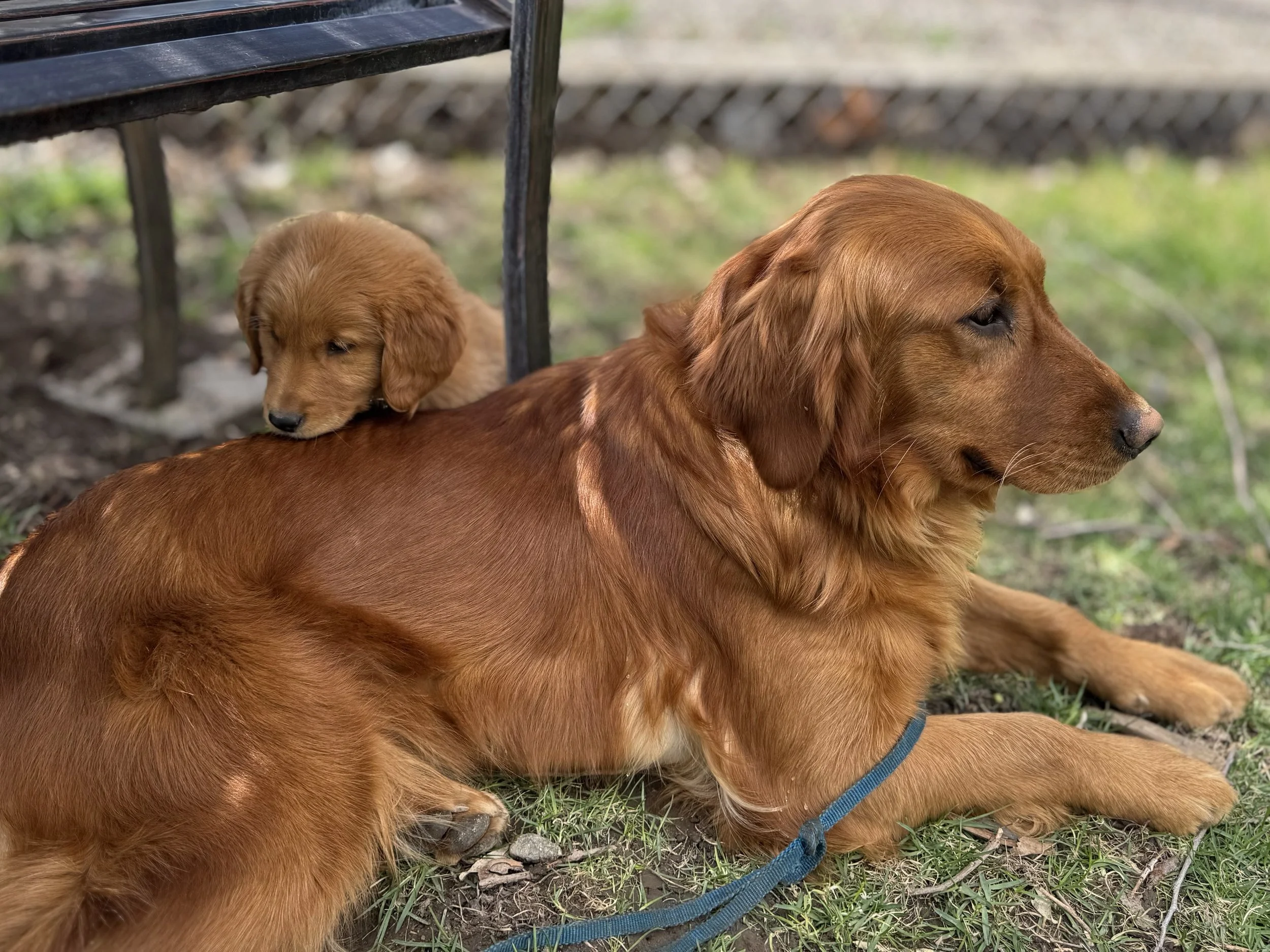
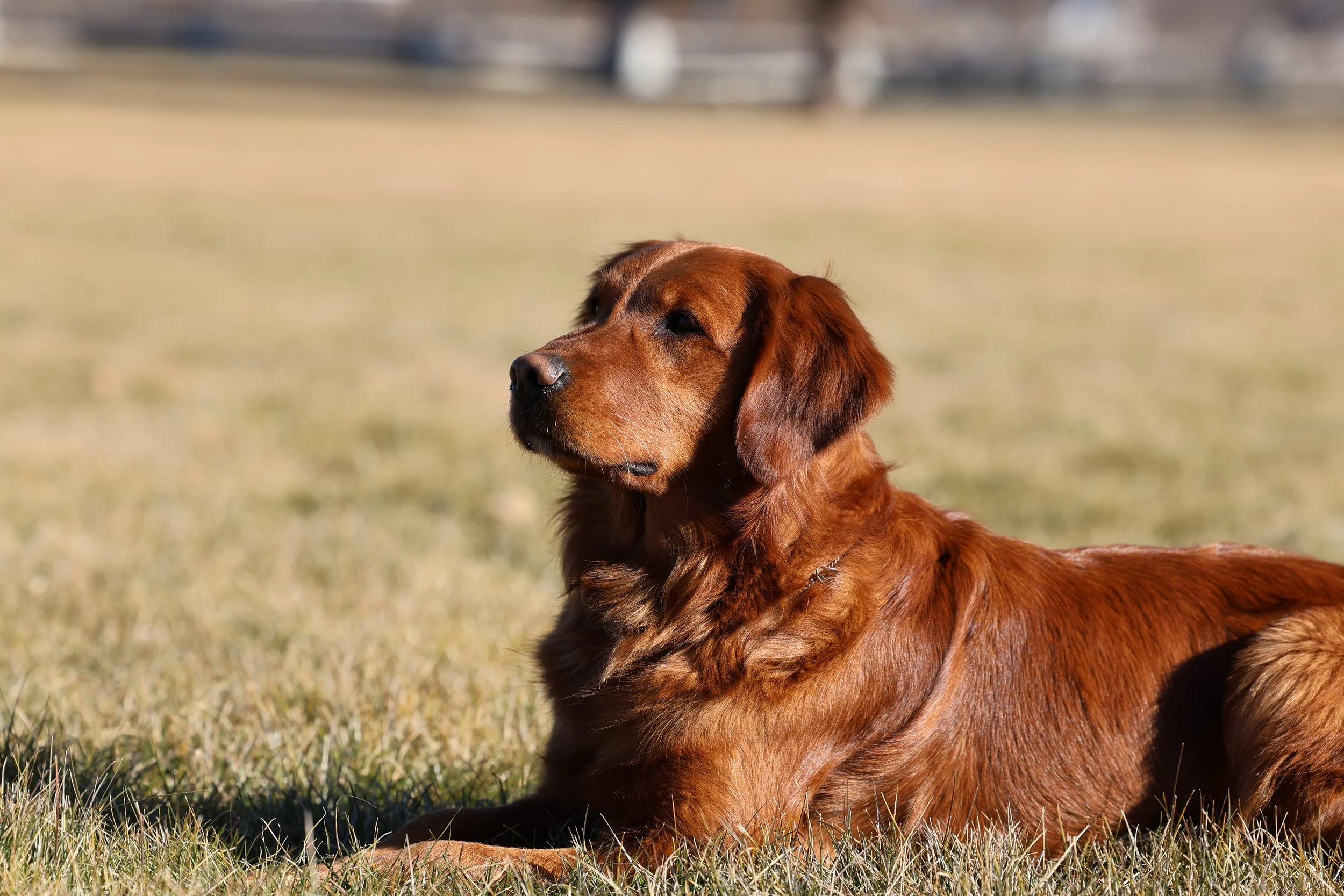
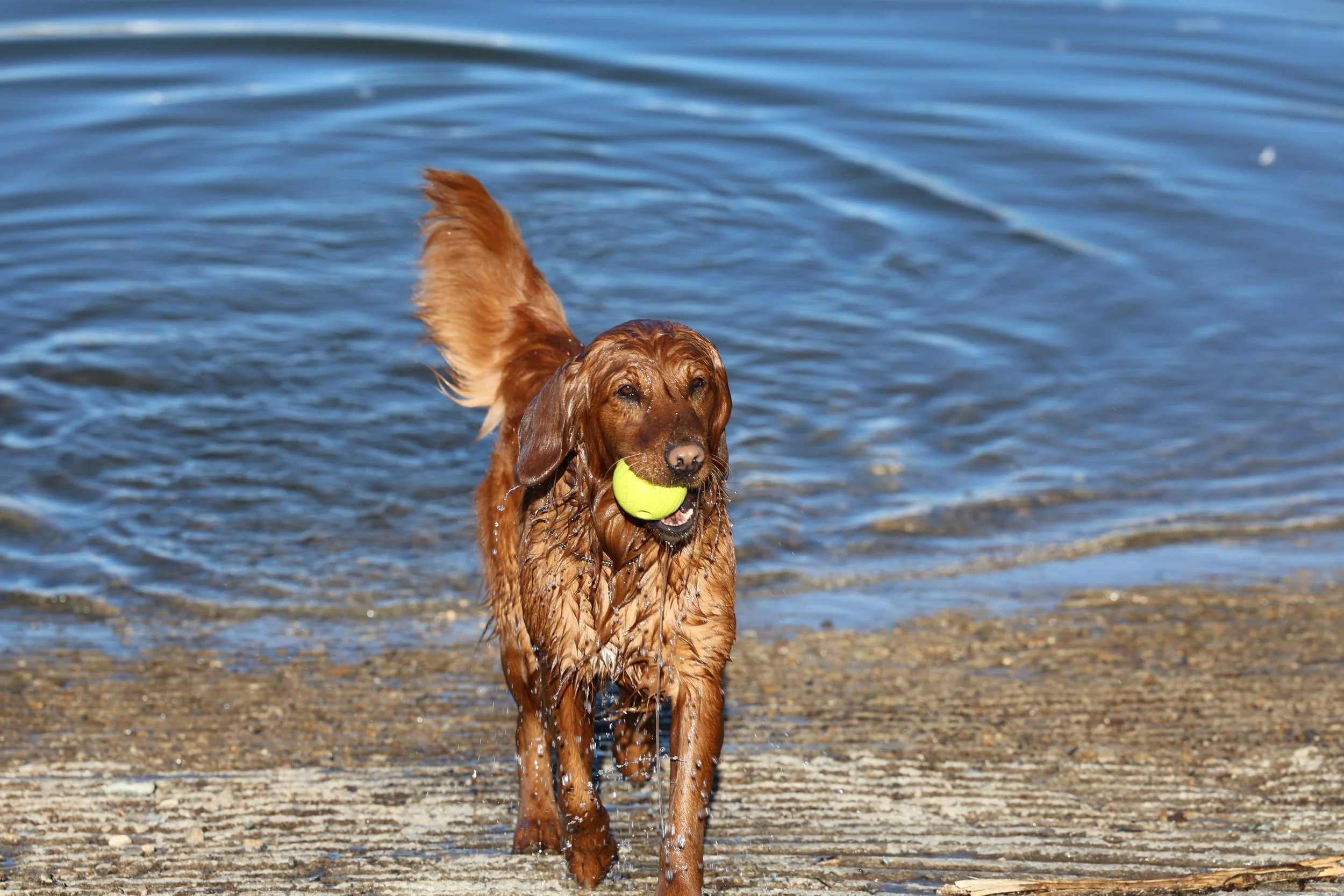
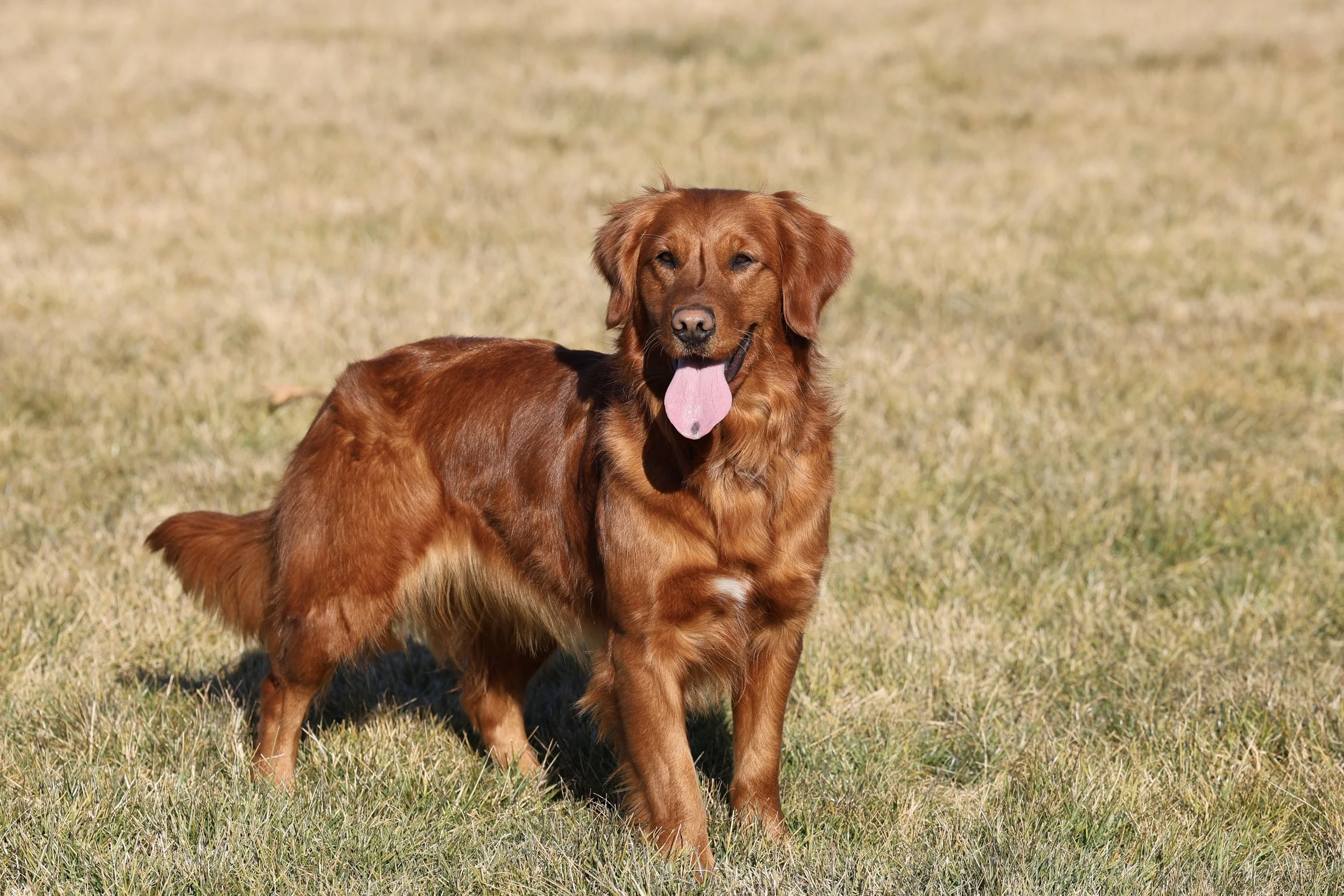
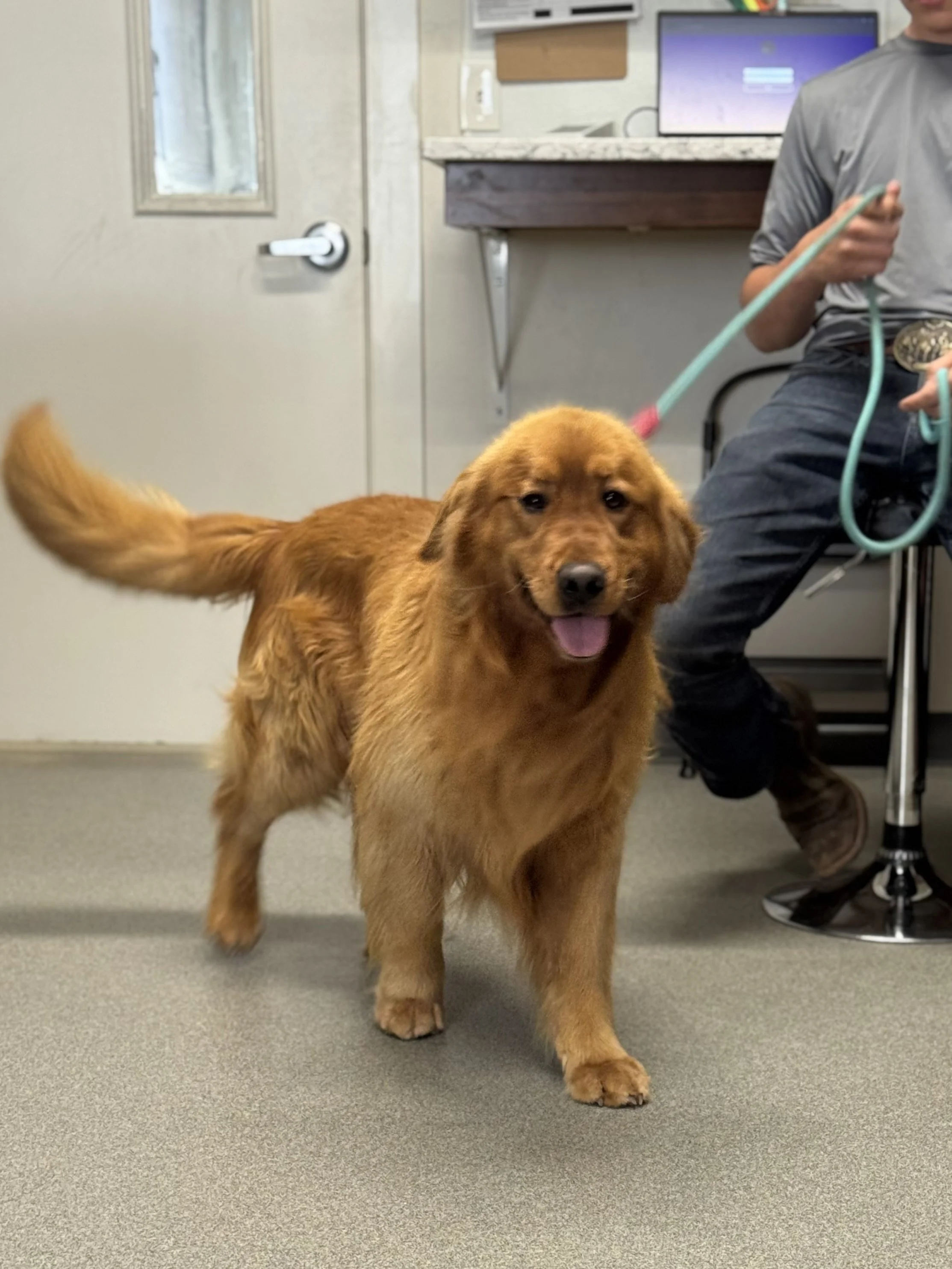
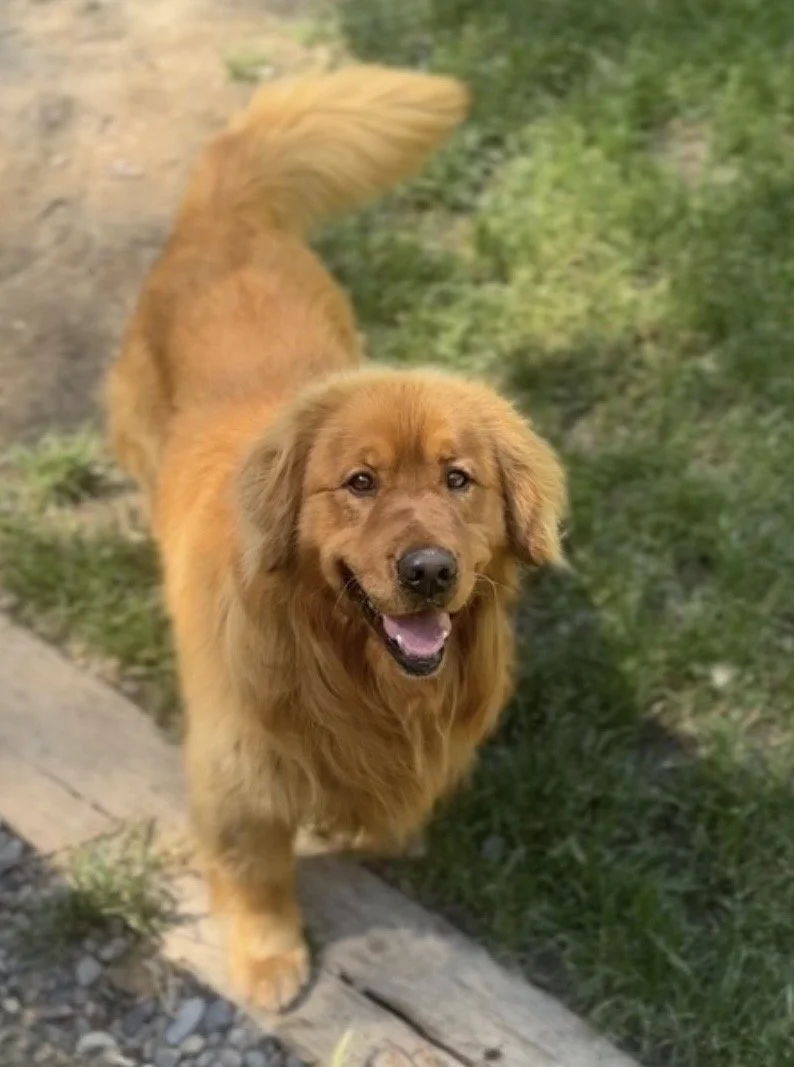
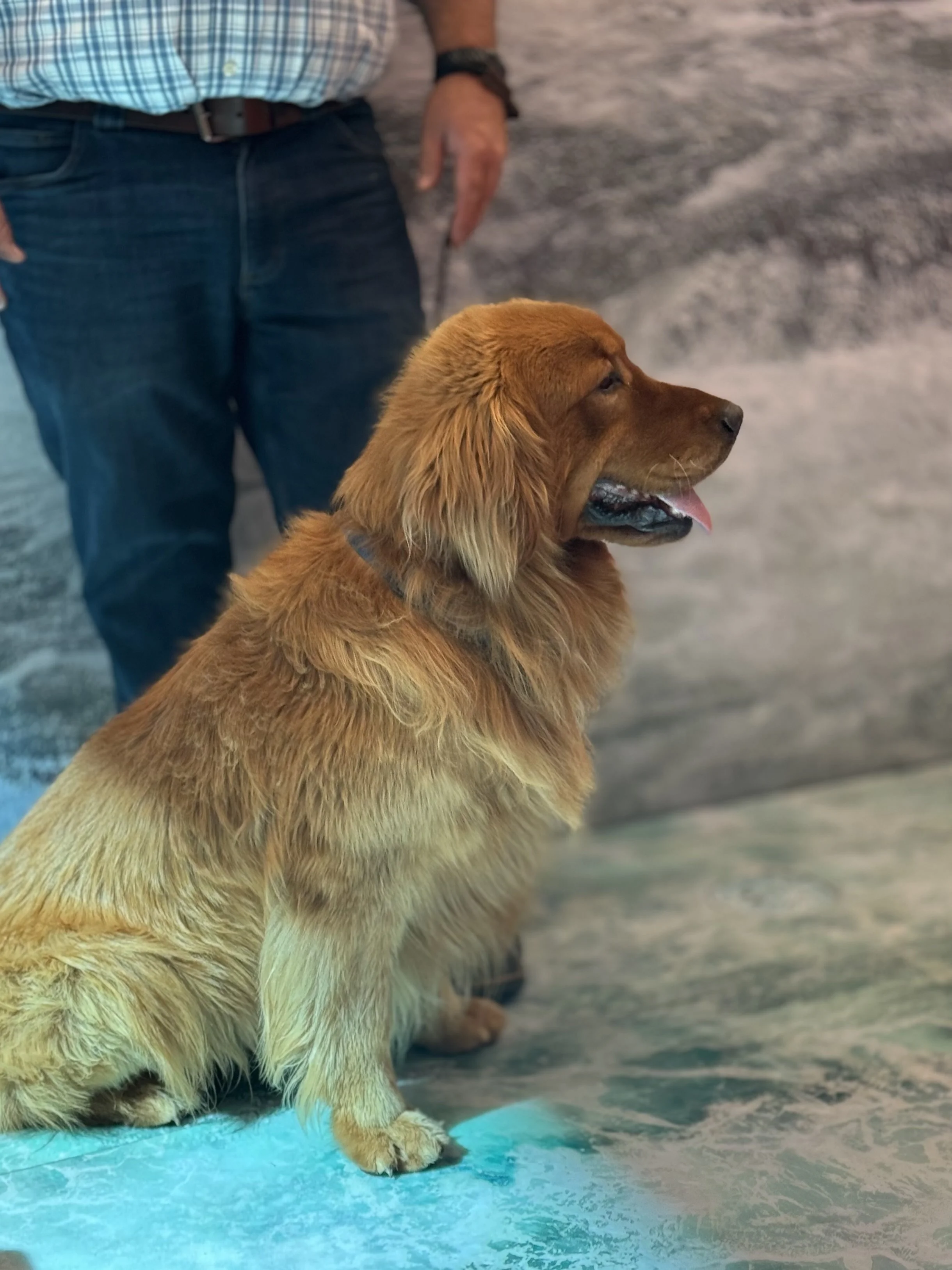
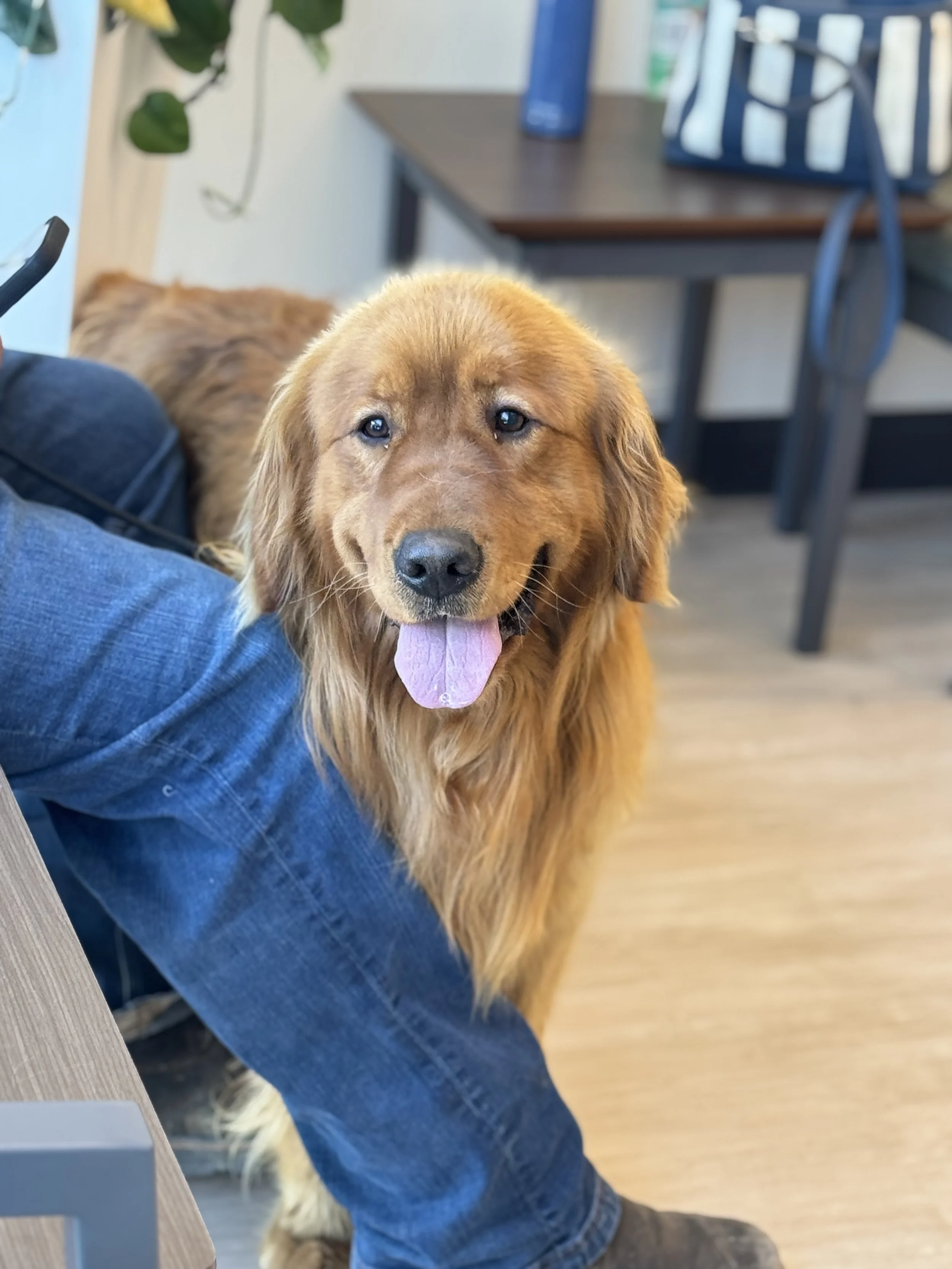
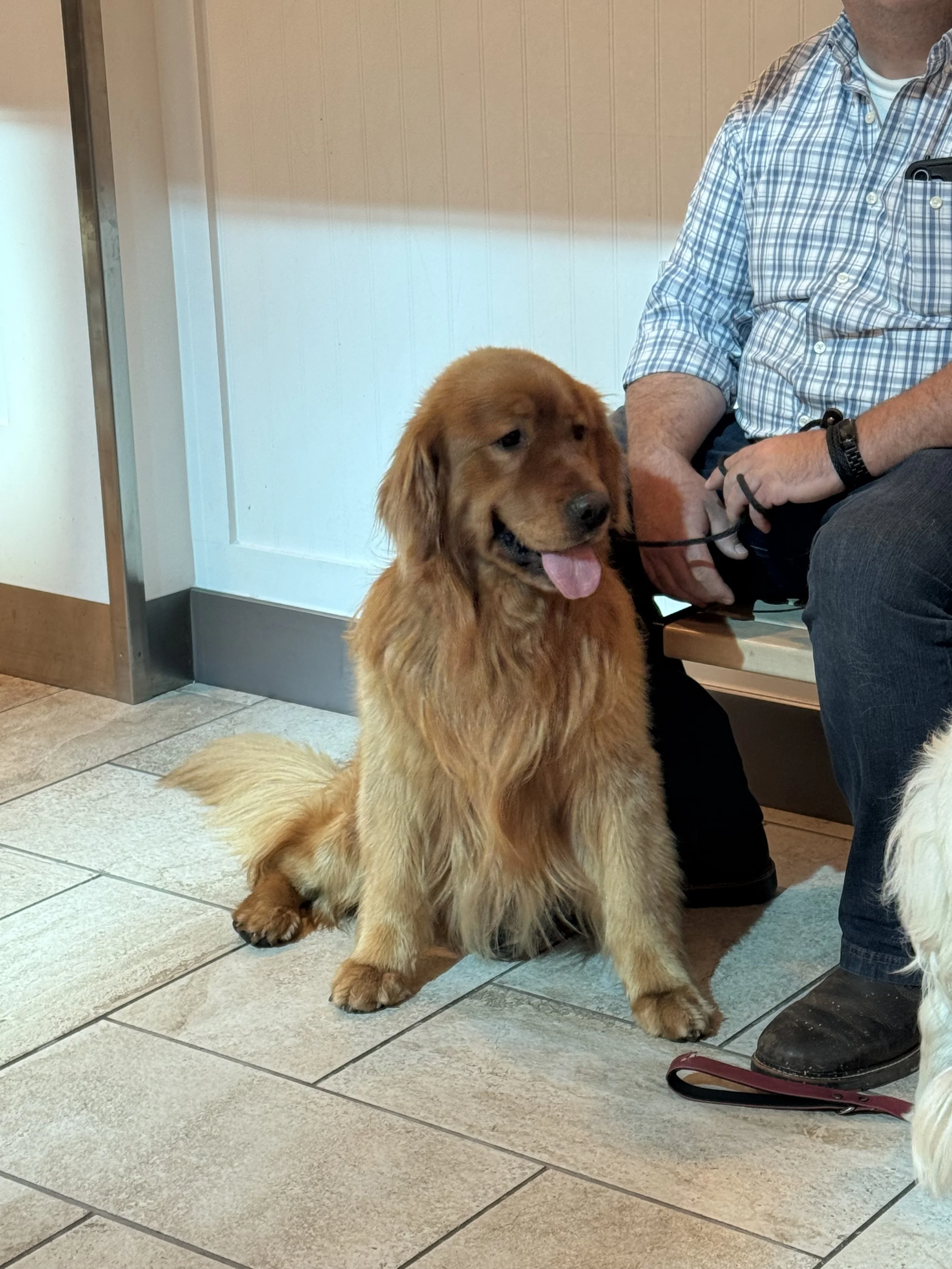
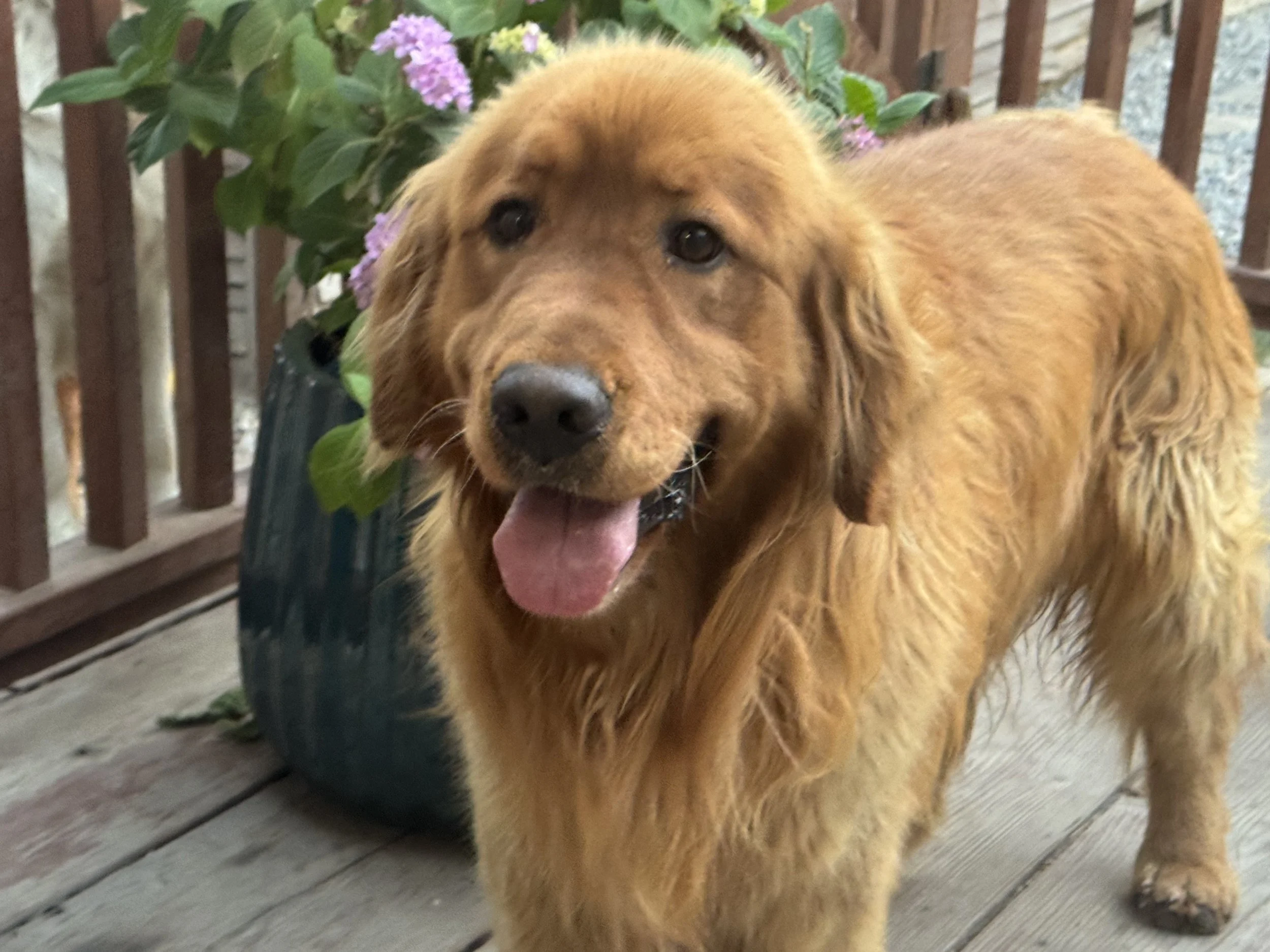
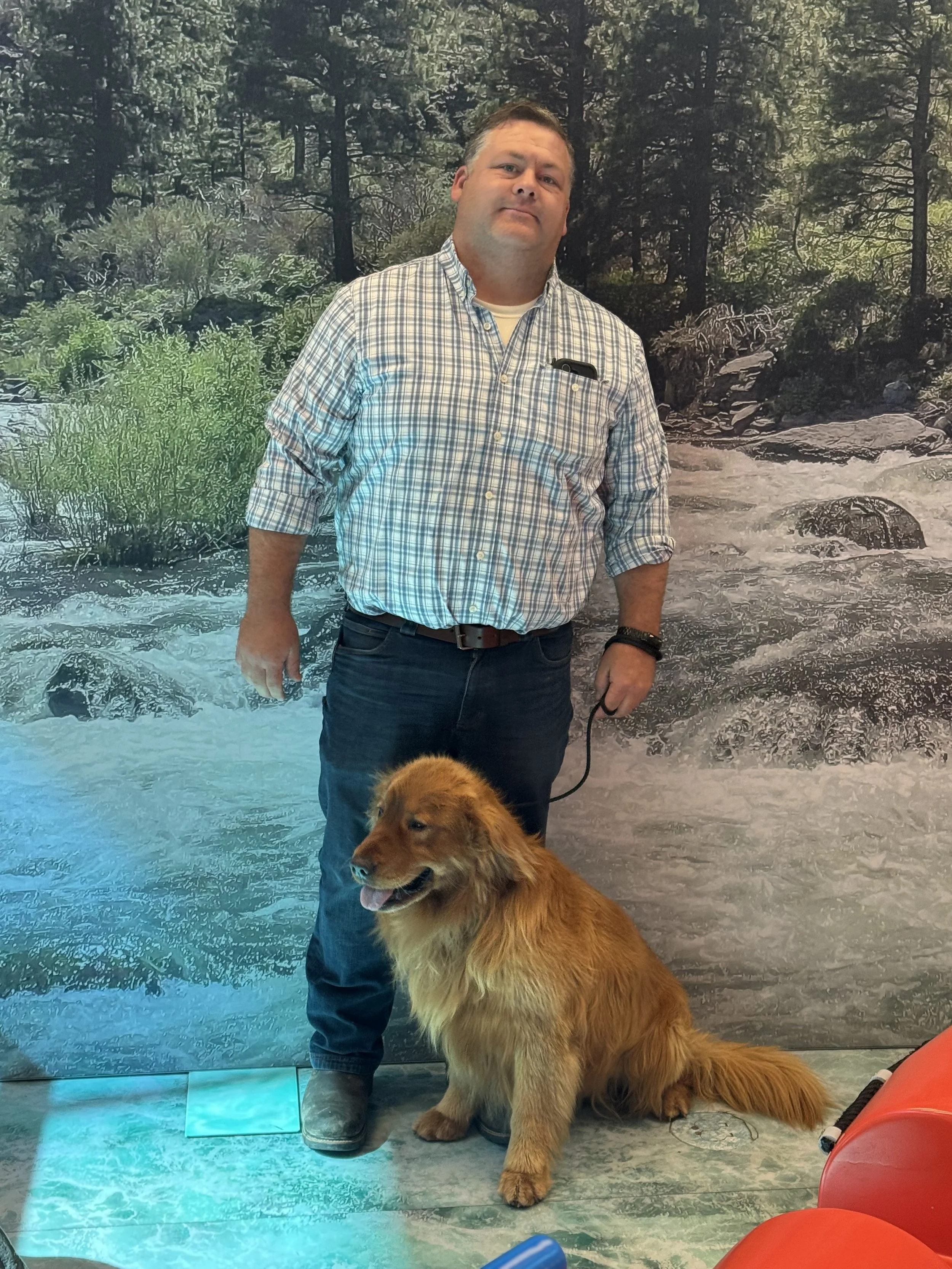
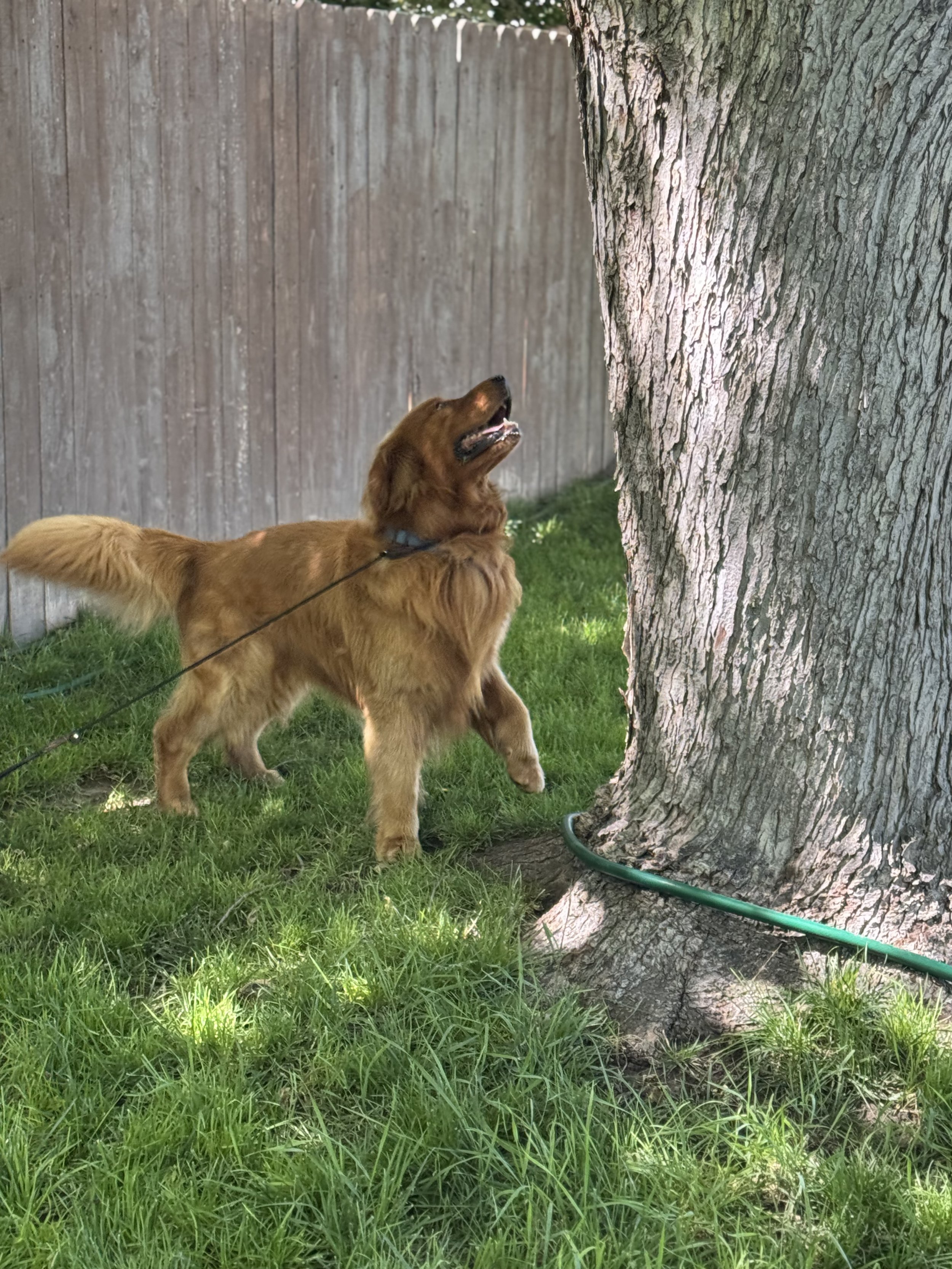
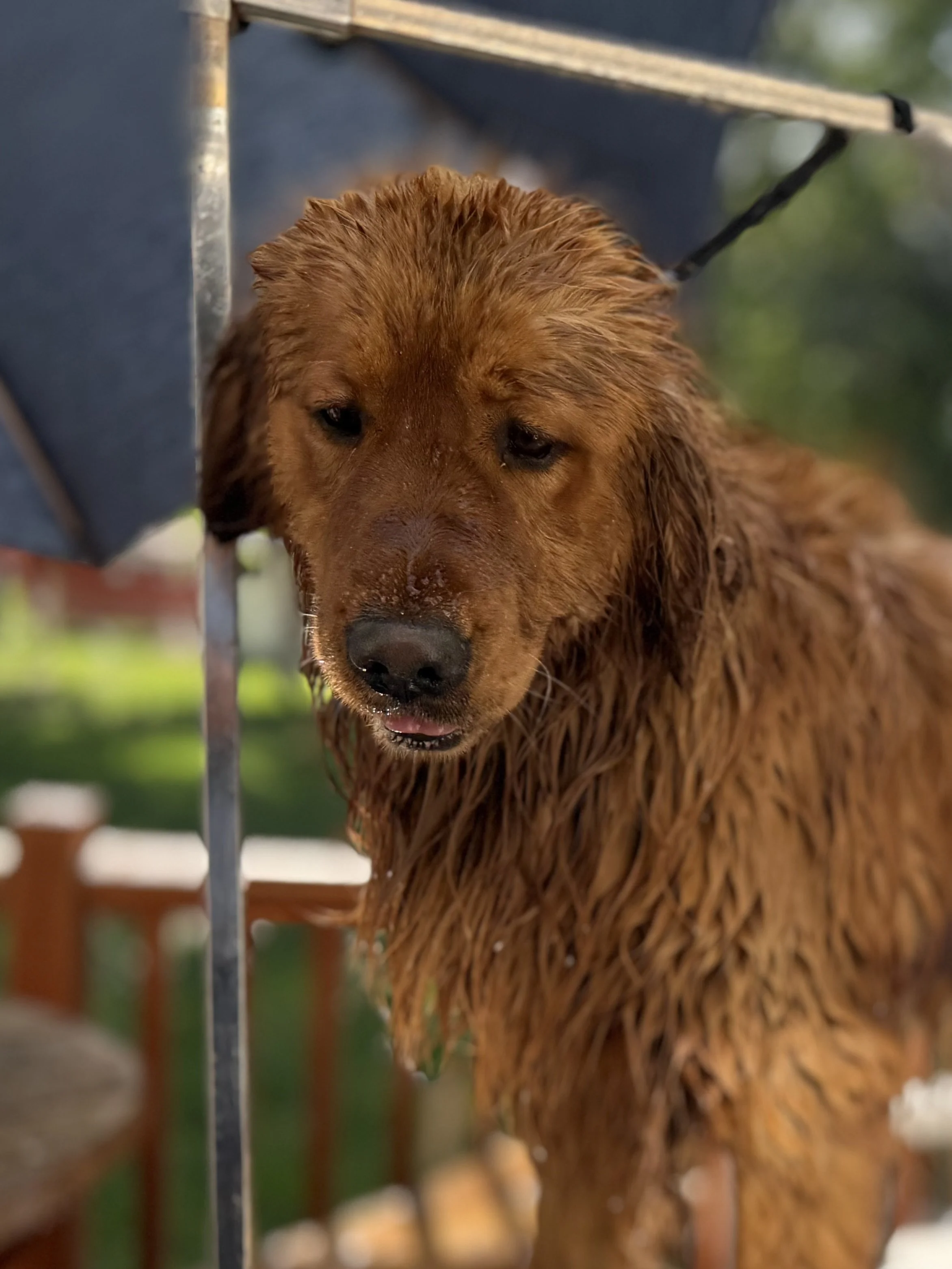
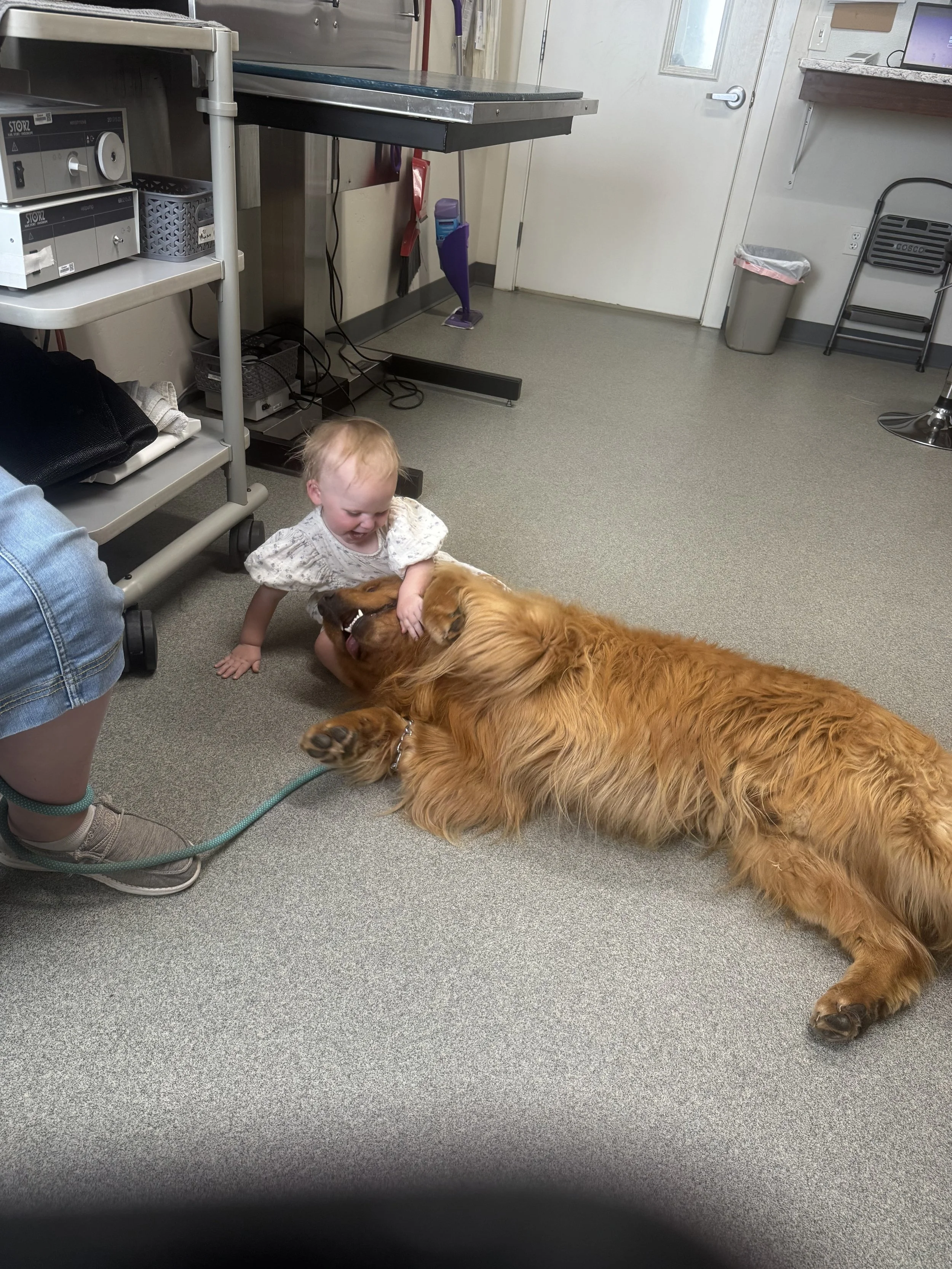
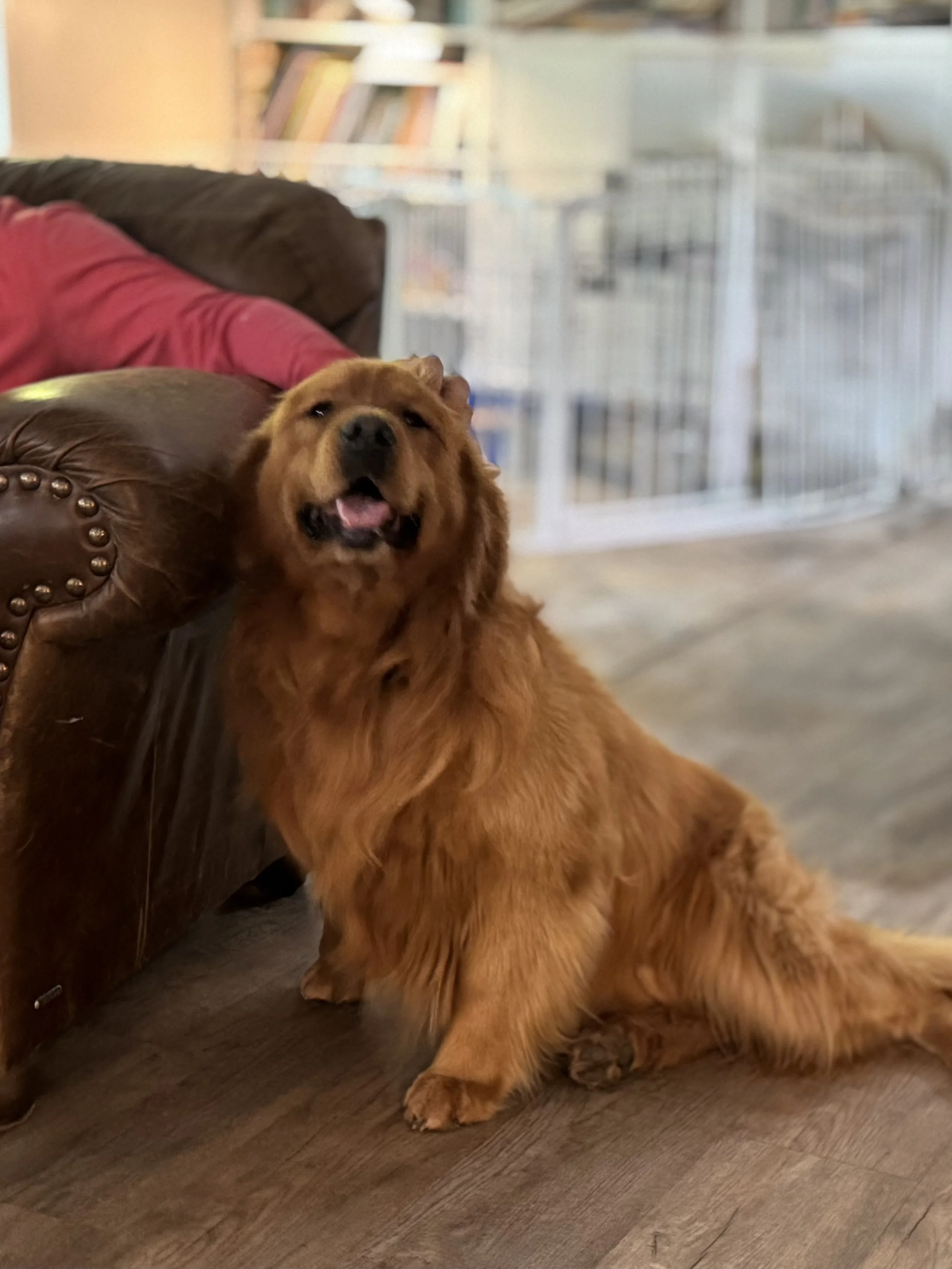
Cayenne: I am Cayenne’s favorite person. She will come and find me wherever I might be. She doesn’t need to touch me, she just likes to know I'm there. If she knows I’m behind a closed door, she will lay there quietly until I come out, however long that might be. Cayenne is very easy to take to town, on trips, or wherever I might decide to go.
Cayenne has a strong ball drive, loves to play fetch, she gets along well with the others, and loves her people immensely.
Weight is 55#
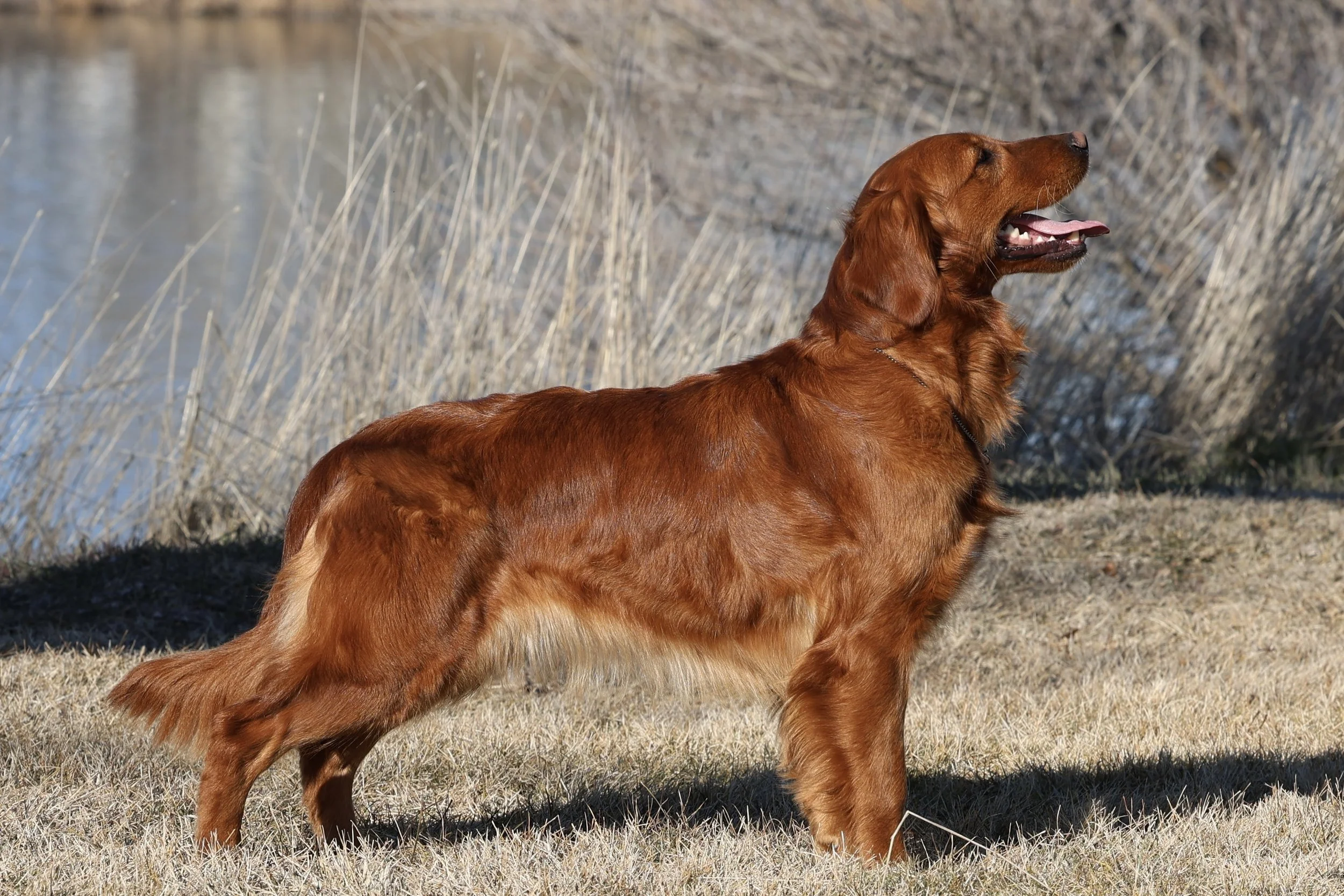
Body and Coat: Cayenne has a very dark golden coat, sometimes referred to as dark red, or mahogany. Technically it’s officially called dark golden.
PADRE - This handsome boy, I’m so in love with him. He’s glorious. He has gorgeous movement, a luxurious coat, and a temperament to die for. He’s confident without needing to prove the point. He is gentle and sweet with kids and other animals.
Body and coat: Padre is average height for a golden retriever, but a thick and solid bone structure. Padre has a rich dark golden coat that resembles that of a fuzzy teddy bear. Padre carries the TT allele for the MC5R gene, which means he’s a low shedding dog. Surprising as looking at him, one might not expect that.
Dogs with at least one copy of the ancestral C allele, like many Labradors and German Shepherd Dogs, are heavy or seasonal shedders, while those with two copies of the T allele, including many Boxers, Shih Tzus and Chihuahuas, tend to be lighter shedders.
Weighs 84#
Both Cayenne and Padre have had been genetic tested, as well as have OFA and/or PennHIP testing
Puppies come with:
The love and care of family
ENS and Deliberate
Socialization & Desensitization
Veterinarian exam
Health Guarantee
Dewormed
First set of vaccinations
Limited AKC registration
How We Raise Our Puppies
The puppies are always raised right here with our family. We believe that it is very important for a puppy to be experiencing the sights and sounds of a regular home from the very first time their ears open and they can hear, or their eyes open and they can see. We’ve utilized different rooms of the house at different times, but most often we set up the Whelping box in our living room. The puppies are handled daily by adults and children alike so they are used to being handled from Day 1. My children adore the puppies and they are used to a lot of love when they come from our house. Not that we have to do much to encourage it but we make a special effort to have our children handle and play with the puppy to encourage early socialization with small children.
Week 1-2:
The puppies are born and we contact everyone on the waitlist to let them know that the puppies have arrived and send pictures. This is always a fun and exciting time!
The first few days are mostly spent eating and sleeping
Day 3-16 we start something called Early Neurological Stimulation or ENS, as long as there hasn’t been extra stress for the litter. ENS is something that the military created for use in their canine program. It was originally a program called “Bio Sensor” and later became known as the “Super Dog Program” After years of study the military learned that these early neurological stimulation exercises would have a lifelong lasting effect. Their studies confirmed that there are specific time periods early in life when neurological stimulation has optimum results. The first period involves a window of time that begins at the third day of life and lasts until the sixteenth day. It is believed that because this interval of time is a period of rapid neurological growth and development, and therefore is of great importance to the individual. ENS is believed to give dogs a superior advantage by utilizing six different exercise created to stimulate the neurological system. I will take each puppy one at at time and complete each exercise once a day. Each exercise is done for 3-5 seconds each.
ENS EXERCISES
Tactile stimulation - holding the pup in one hand, I will gently tickle the pup between the toes on any one foot using a Q-tip for 3-5 seconds.
Head held erect - using both hands, I will hold the puppy perpendicular to the ground, (straight up), so that its head is directly above its tail. This is also done for 3-5 seconds.
Head pointed down - holding the pup firmly with both hands the head is reversed and is pointed downward so that it is pointing towards the ground for 3-5 seconds.
Supine position - hold the pup so that its back is resting in the palm of both hands with its muzzle facing the ceiling. The pup while on its back is allowed to sleep. Time of stimulation 3-5 seconds.
Thermal stimulation—Using a damp towel that has been cooled in a refrigerator for at least five minutes I will place the pup on the towel, feet down. I do not restrain it from moving off the towel if it desires to do so. Time of stimulation 3-5 seconds.
These five exercises will produce neurological stimulations, none of which naturally occur during this early period of life. I have found that sometimes pups will resist these exercises, others will appear unconcerned. These exercises gently stress the puppies for very short periods of time to help them learn how to recover quickly from stressful situations which really benefits them later in life. These exercises impact the neurological system by kicking it into action earlier than would be normally expected, the result being an increased capacity that later will help to make the difference in its performance. These exercises do not take the place of routine handling or play with the puppies. This is all done in addition to those things.
ENS has been shown to improve cardio vascular health, or the puppy’s heart rate, stronger heart beats, stronger adrenal glands, more tolerance to stress and greater resistance to disease, they do betting learning situations than puppies that have not had the benefits of ENS. Puppies that have had ENS tend to be more calm in test environments where they were introduced to new situation that could be stressful to them. They made less errors and vocalized their distress less than other puppies that didn’t have ENS.
Week 3-4
The Puppies move from the initial whelping box set up to a bigger weaning pen to give them more room as they start to toddle around on their wobbly feet. This happens between week 3-4 depending on the litter. Some litters start walking around earlier than others. Before they start walking I want to make sure they have a cosy environment where it is easy to find their littermates or mom and snuggle up together.
The Enrichment Effect: Puppies receive an expertly enriched environment, the benefits of which will last a lifetime. This continues every week until puppies leave.
Litter box is added to start the foundations of potty training, reinforcing the need to keep their home clean and that there is an appropriate place to potty. I use a animal bedding pellets and alfalfa pellets or pine shavings.
Week 4-5
If they haven’t already, the puppies are moved from the whelping box into a bigger weaning pen where they are given age appropriate toys and enrichment.
Puppies are started on Puppy food - Depending on the maturity of the particular litter, this is just dry kibble that has been ground up into powder and then mixed with warm water, or classic kibble. We like to start adding probiotics as well and NuVet vitamins at this point. This helps out mom so that they aren’t completely depending on her milk although they still nurse as much as mom allows during this time.
We begin crate training this week! We begin crate training with the crates placed in the weaning pen with the doors open. We place a comfy bed inside the crates to encourage the puppies to pick that spot to sleep.
If it is nice outside the puppies begin going outside to get used to new sights and sounds.
Week 6 - 7
Puppies go to the vet this week and get a complete head to toe examination
Puppies get their first set of shots and their biweekly dewormer.
This is Puppy Pick Week! Video calls are scheduled and you get to pick out which puppy is going to be yours to take home. I can usually tell you the different personalities of the puppies to help you pick out which one would be the best fit for your family. Sometimes I will have a litter with very similar personalities and it will be hard to tell them apart but there is usually a pack order of leaders and followers
Puppies are given novel objects to play with to continue expanding their curiosity and confidence with enrichment seeking abilities.
The puppies have access to dry kibble at all times. They like to chew on it as their teeth are coming through.
Week 8 - 10, Transiting to their forever homes
Most of our puppies will be going home right around their 8 week mark
We continue to work on being comfortable in the crate. If the puppies are still in our home past 8-10 weeks we begin having them sleep in their crates with the door closed during the night.
The puppies continue with their free feeding schedule but the food and water that they have all day is removed at 8pm to make sure they have an empty bladder before going to bed
•If a puppy is to remain at our house past the 8 week point, they are automatically enrolled in our puppy bootcamp program.
Disclaimer ~ We are a family and sometimes this schedule is not exact. This is the general plan, but sometimes things happen on a bit different times table than the exact layout, whether for personal reasons or a litter simply is more or less advanced.